Commercial flooring decisions involve more people and more constraints than residential projects. A store manager wants something that looks good and is easy for staff to clean. An owner wants a reasonable cost and a floor that won't need replacement soon. A property manager wants minimal disruption to neighboring tenants. Sometimes there is a general contractor, an architect or a franchise standard in the mix as well.
Resinous floors, the broad category that includes epoxy, polyaspartic, polyurea, urethane and urethane cement systems, are popular in commercial spaces because they can be tailored to almost any combination of appearance and performance. The key is writing the specification around how the space is actually used.
Benefits for businesses
Cleanability. A seamless, non-porous surface can be mopped or auto-scrubbed quickly, with no grout lines to trap dirt or bacteria.
Durability under traffic. Properly specified systems resist foot traffic, carts, rolling racks and equipment far better than bare concrete or many sheet goods.
Brand and design flexibility. Colors, flake blends, metallic finishes, logos and wayfinding lines can all be built into the floor.
Chemical resistance. Coatings can be selected to resist the specific products used in the space, from salon chemicals to automotive fluids to food-service cleaners.
Reduced downtime. Fast-curing systems can return a space to service quickly, and phased installation can keep part of a business open while another part is coated.
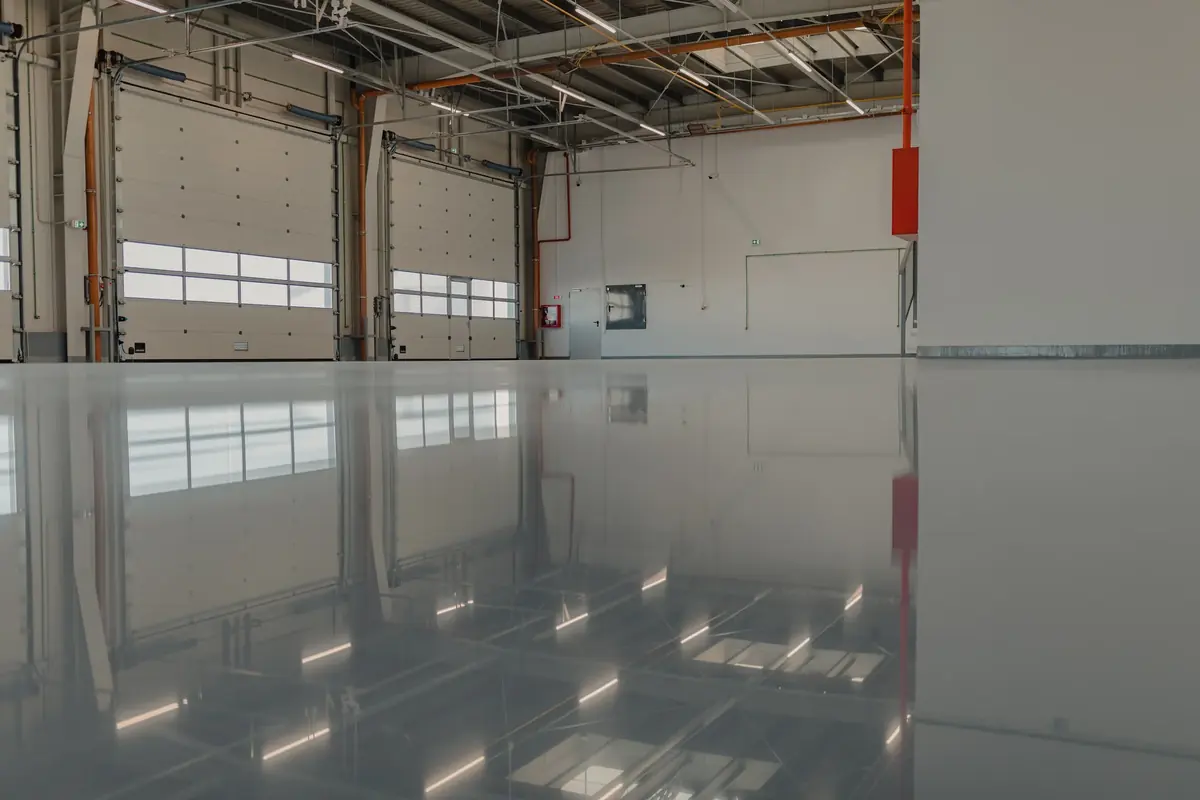
Light reflectivity. Brighter floors can make retail displays and work areas look better and feel more open.
Systems for different commercial uses
Retail and showrooms
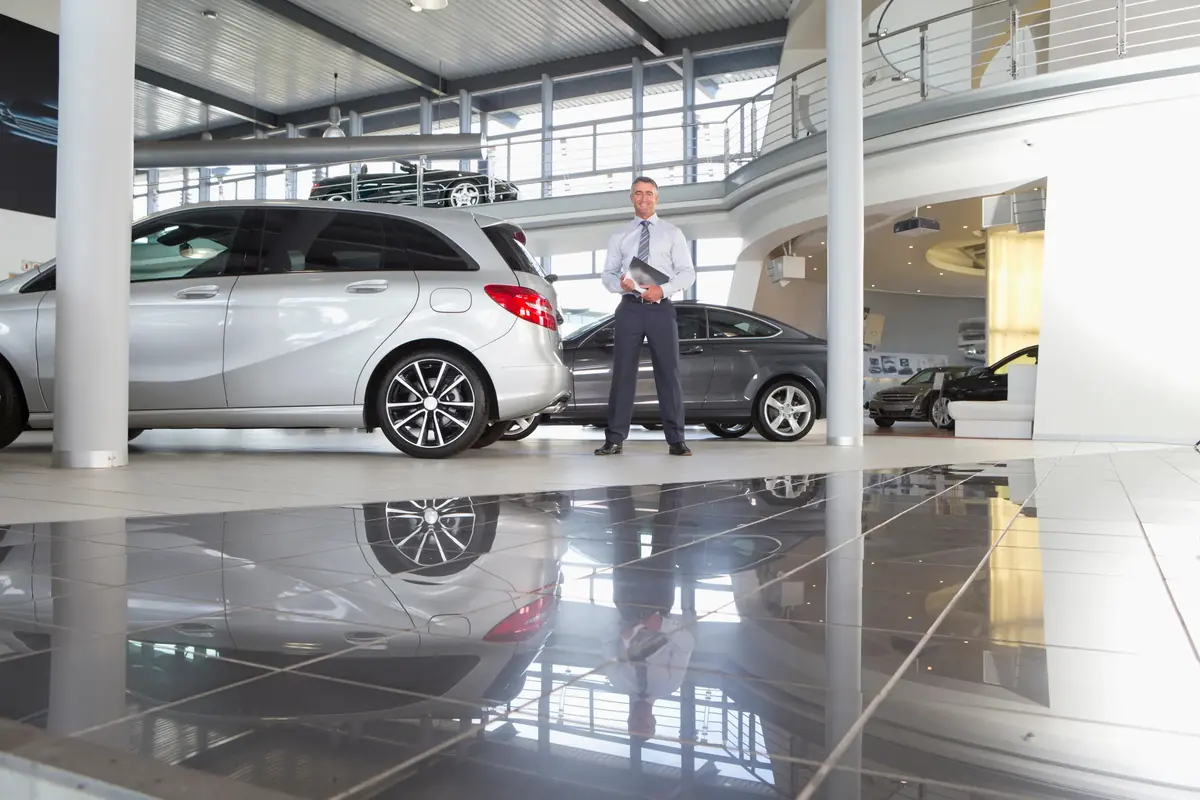
Retail floors need to look good under display lighting and hold up to foot traffic and fixtures. Solid colors with satin topcoats, metallic finishes and fine flake blends are popular. Showrooms for vehicles, boats or equipment often call for high-gloss finishes that reflect product beautifully.
Salons, spas and barbershops
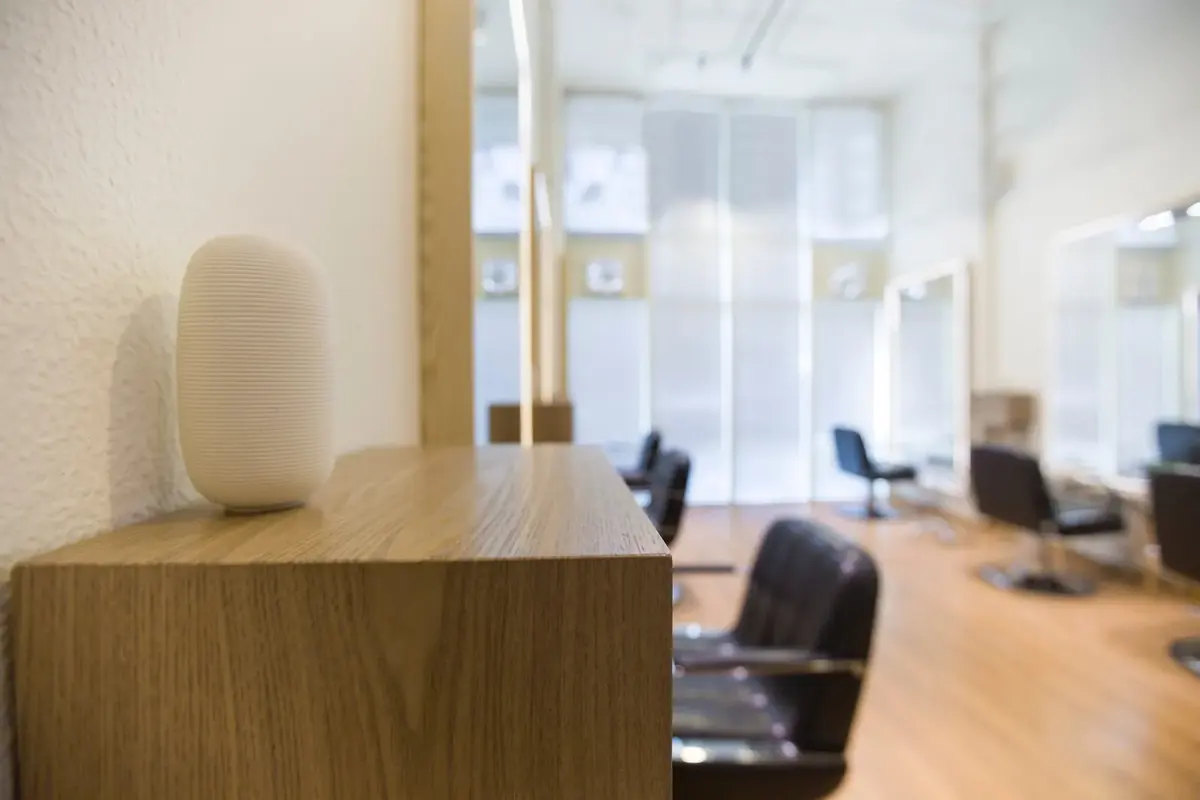
These spaces deal with hair dyes, chemicals, water and constant sweeping. A chemical-resistant topcoat and a finish that hides hair and minor stains work well.
Medical, dental and veterinary clinics
Cleanability and seamless surfaces are priorities. Integral cove bases, where the coating curves up the wall a few inches, remove the floor-to-wall joint where dirt collects. Slip resistance and chemical resistance to disinfectants are specified carefully. If your facility has specific regulatory requirements, we work from your specifications.
Restaurants and commercial kitchens
Kitchens face hot water washdowns, grease, food acids and thermal shock. Standard epoxy is often not the right choice here. Urethane cement systems are designed for thermal cycling and heavy wet use, and they are the type of system we typically discuss for commercial kitchens. Front-of-house dining areas can use more decorative systems.
Gyms and fitness studios
Gyms need impact resistance, cleanability and traction. Coatings are often combined with rubber flooring in lifting areas.
Offices and lobbies
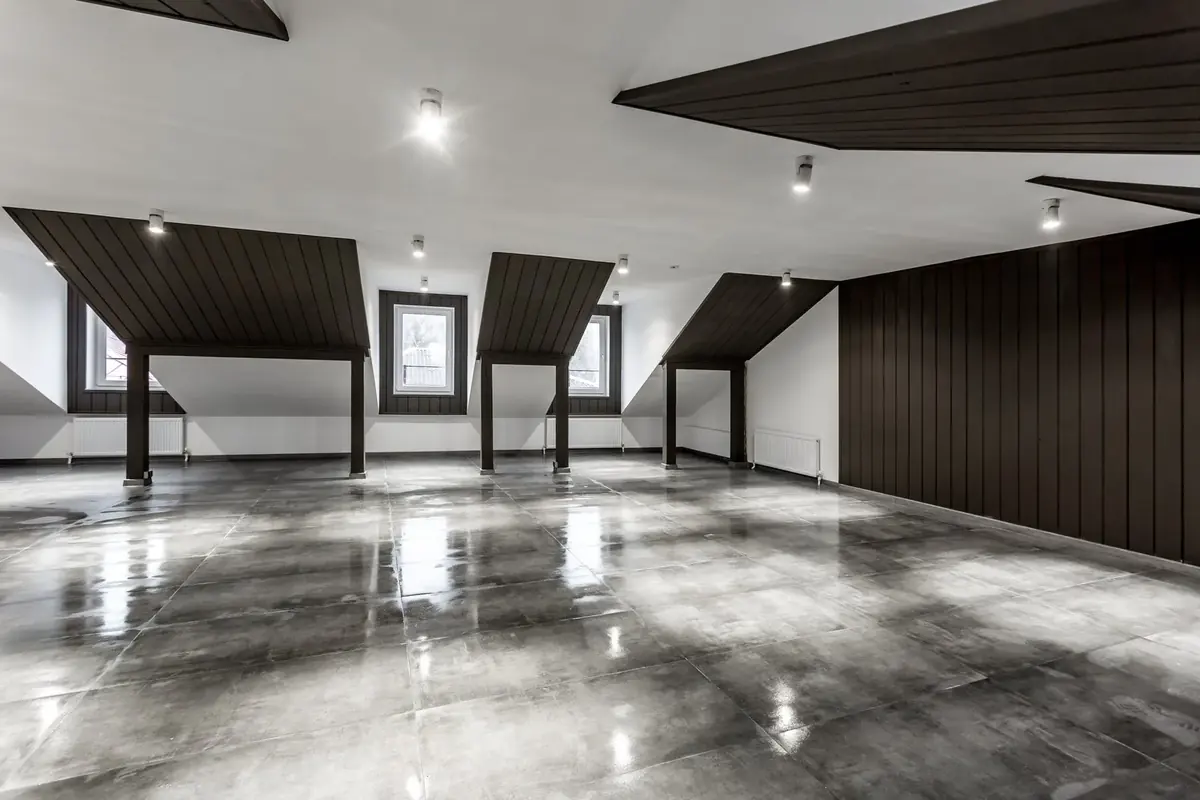
Offices often want the look of polished concrete or a refined solid color without the maintenance of carpet. Satin finishes reduce glare.
Auto service and detail shops
Service bays deal with oil, coolant, brake fluid, tire marks and heavy lifts. Thicker systems with chemical-resistant topcoats and, where needed, slip-resistant texture are used here.
Planning commercial installations
Site assessment
We assess the slab, existing flooring, moisture conditions, traffic patterns, chemical exposure and any requirements from the owner, landlord or design team. For tenant improvements, we also review access, working hours, ventilation and protection of adjacent spaces.
Scheduling around operations
Many commercial projects happen after hours, over weekends or in phases. Fast-cure polyaspartic systems can shorten closures significantly. We coordinate with management to protect inventory and equipment.
Odor and ventilation
Some coatings produce odor during application. In occupied buildings, we choose lower-odor products where possible and coordinate ventilation with building management.
Preparation
Commercial slabs may have tile, adhesive, old coatings or sealers. We remove them by grinding or other mechanical methods, repair the slab and test moisture. Large slabs may need joint treatment that respects the original design.
Installation and quality control
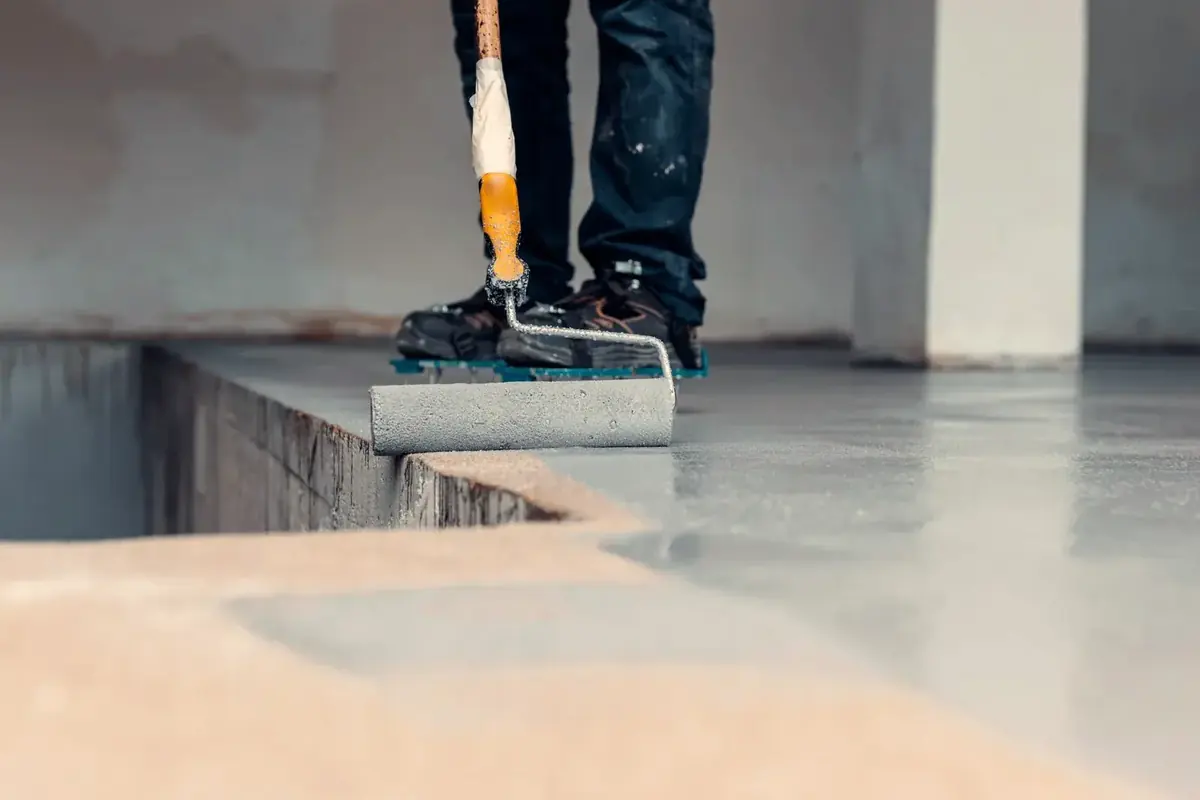
Systems are installed to the specification, with attention to batch consistency, film thickness and finish quality. For larger areas, batches are tracked to keep color and sheen uniform.
Why professional commercial installation matters
In a commercial space, failures are expensive. A peeling floor means another closure, lost revenue and frustrated staff. Experienced installers understand how to prepare different slabs, how to specify systems for specific exposures and how to stage work so a business keeps running.
Clear communication matters too. We provide written specifications, schedules and maintenance instructions, so your staff know how to care for the floor from day one.
Phoenix considerations for commercial floors
Building temperatures
Commercial spaces under construction may not have HVAC running yet. In summer, an unconditioned building can get extremely hot, which affects cure and working time. We coordinate with the project schedule so HVAC is running where possible, or plan work for cooler hours.
Dust from construction and storms
Commercial projects often happen alongside other trades. Dust from drywall sanding or monsoon storms can contaminate a fresh floor. We schedule coating after dusty trades finish and protect the area.
Sun through storefront glass
Storefronts and lobbies often have large expanses of glass. The floor near those windows sees direct sun, so a UV-stable topcoat is important.
Moisture in new slabs
New construction slabs need time to dry before coating. We test and use moisture-mitigating primers when schedules require coating before the slab has dried fully.
Maintaining commercial floors
Daily dust mopping or sweeping, regular wet cleaning with a neutral cleaner and the right auto-scrubber pads keep a resinous floor looking good. Walk-off mats at entries reduce grit. High-traffic areas may eventually need a refresh topcoat, which can often be done over a weekend.
Matching the system to the business
| Type of space | Main demands | Systems commonly considered |
|---|---|---|
| Retail and showrooms | Appearance, foot traffic, fixtures | Solid color, metallic, fine flake with urethane or polyaspartic topcoat |
| Salons and spas | Chemicals, water, hair and dye | Flake or solid with chemical-resistant topcoat |
| Clinics and labs | Cleanability, disinfectants, seamless edges | Solid or flake with integral cove base |
| Commercial kitchens | Hot washdown, grease, thermal shock | Urethane cement systems |
| Gyms | Impact, sweat, cleaning | High-build epoxy with textured topcoat |
| Auto service | Fluids, tires, lifts | High-build epoxy, polyaspartic or urethane topcoat, texture |
Tenant improvements and coordination
Many commercial floors in Phoenix are installed during tenant improvements, when a new business is fitting out a leased space. Flooring usually comes near the end of construction, after walls are painted and before fixtures go in. We coordinate with the general contractor on slab readiness, moisture testing results, HVAC operation and the order of trades, so the floor isn't damaged by work that follows.
What affects commercial project cost
The main factors are the condition of the existing slab or flooring, the system chosen, total area and layout, the need for cove bases, logos or striping, the required schedule (after-hours and phased work take more coordination) and moisture mitigation if testing calls for it. We provide itemized proposals so owners and managers can make informed decisions and compare options.
Choosing a sheen and texture
Gloss looks striking in showrooms, but it shows scuffs and can be slippery when wet. Satin is the most common choice for retail and offices because it balances appearance and maintenance. In wet or greasy areas, a textured finish with aggregate improves traction. We often recommend different textures in different zones of the same business, such as smooth on the sales floor and textured near the back door or restrooms.
Restaurant dining rooms and front-of-house
While commercial kitchens usually call for urethane cement, dining rooms, host stands, bars and patios have different needs. Here the floor contributes to the atmosphere of the space, so decorative finishes such as metallic, fine flake or solid colors with a satin sheen are common. Spills from drinks and food are frequent, so a chemical-resistant topcoat and appropriate traction are still important. We often design the transition between the kitchen system and the dining room finish so it falls at the doorway or service line.
Helping your staff care for the floor
A resinous floor is easy to maintain, but only if the cleaning crew knows how. Harsh degreasers, the wrong scrubber pads or acidic cleaners can dull a topcoat over time. When we finish a commercial floor, we provide written care instructions that cover daily cleaning, recommended cleaners, scrubber pad types and what to do about spills of specific chemicals. Sharing these with staff and any janitorial contractor keeps the floor looking its best.
Questions about commercial epoxy flooring
Can you install a floor without closing my business?
Often we can phase the work or schedule it after hours. Fast-curing systems help. We'll discuss options during the site visit.
Which commercial floor system is best?
It depends on the use. A retail floor, a clinic, a kitchen and a service bay each need different systems. We recommend based on traffic, chemicals, cleaning methods, appearance and budget.
Can you add our logo or branding?
Yes. Logos, color fields and wayfinding lines can be built into many systems. Complex designs may need additional time.
Do you provide product data sheets?
Yes. Every proposal can include the manufacturer's technical and safety documents for each layer, so architects, facility teams and franchise reviewers can check the specification themselves.
Can you work with our general contractor?
Yes. We coordinate with general contractors on scheduling, slab readiness and site conditions.