Industrial floors are judged by different standards than homes or retail spaces. The question is not how the floor looks on day one but how it performs after months of forklift traffic, pallet drops and spills. Coating systems for these spaces are thicker, tougher and specified more carefully, and the planning often matters as much as the materials.
Phoenix has a large amount of warehouse, distribution and light industrial space. Many of those buildings have slabs that were simply sealed or left bare at construction. Over time, they dust, stain and wear in the traffic lanes. Coating them can extend slab life, improve cleanliness and help organize operations.
Why coat a warehouse floor?
Protect the slab. Forklift wheels and dragged loads abrade concrete. A coating takes that wear.
Eliminate concrete dust. Bare concrete sheds fine particles that settle on products and racking and get into equipment. Coating locks down the surface.
Make spills manageable. Hydraulic fluid, oil, coolant and cleaning chemicals can be cleaned up more easily from a coated floor.
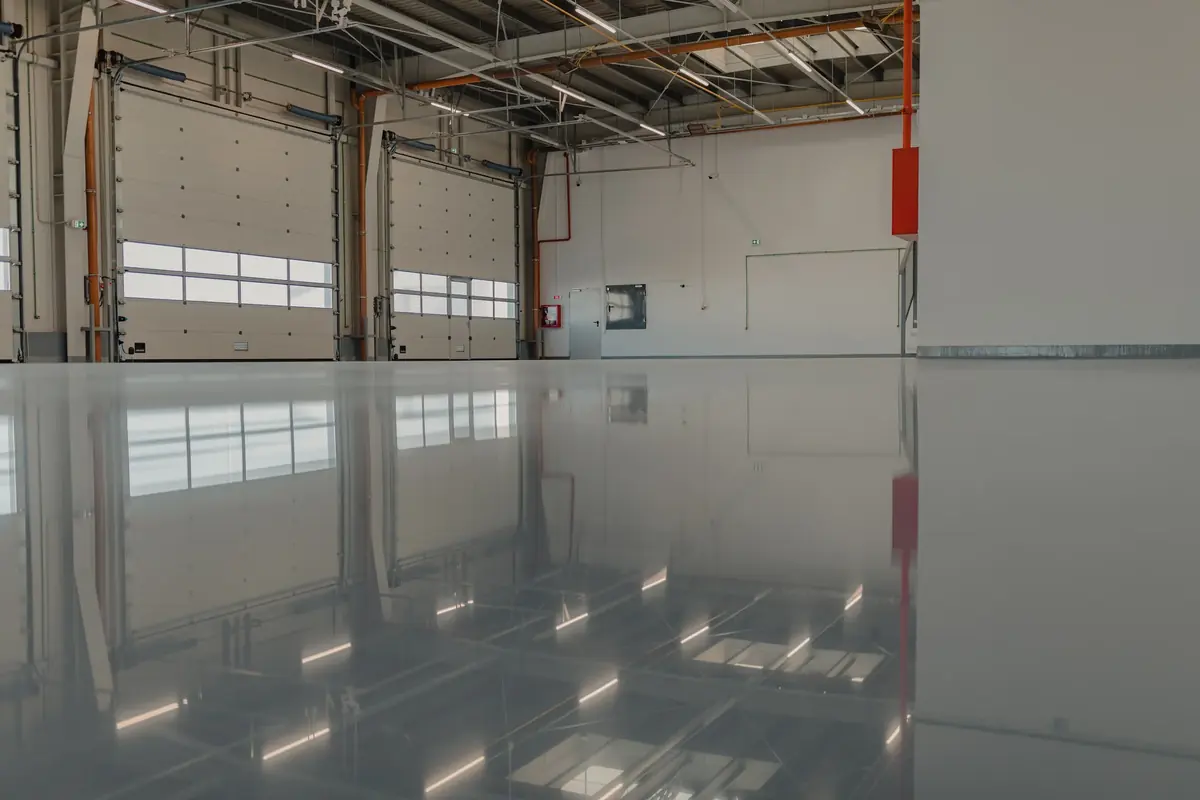
Improve visibility. Light-colored coatings reflect more light, helping workers see hazards and making the space feel brighter.
Organize the floor. Aisle lines, pedestrian walkways, staging zones and hazard markings can be integrated into the coating.
Support cleaning. Auto-scrubbers work more effectively on smooth coated surfaces than on porous concrete.
Industrial coating systems
High-build epoxy
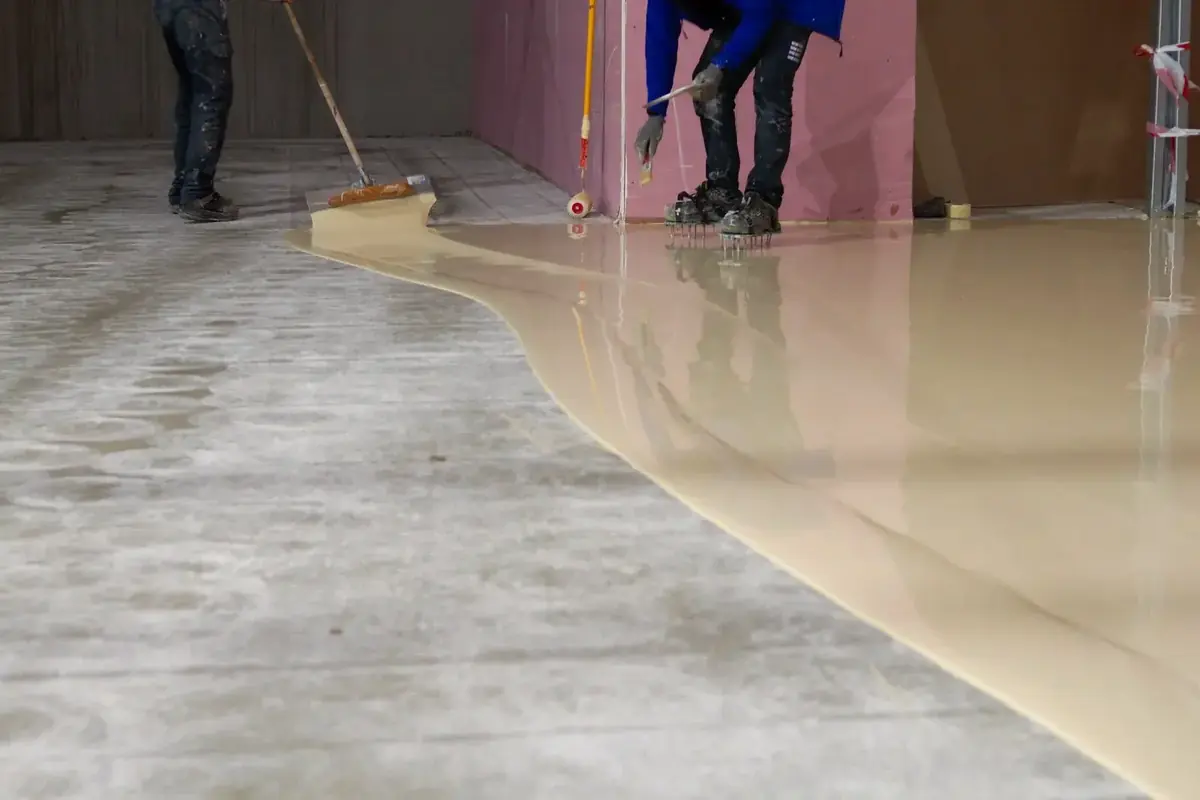
Thick epoxy coatings, sometimes applied as self-leveling layers, are the standard for many warehouses. They provide impact and abrasion resistance and can be finished with chemical-resistant topcoats.
Epoxy with urethane or polyaspartic topcoat
A urethane or polyaspartic topcoat over epoxy improves abrasion and chemical resistance and helps resist marking from forklift tires.
Slurry and broadcast systems
Quartz or aggregate broadcast into epoxy creates thick, textured floors for areas with wet or oily conditions, ramps and loading docks.
Urethane cement
For areas with thermal shock, heavy chemical exposure or constant washdown, such as food processing or some manufacturing, urethane cement systems are often the better choice.
Thin-film sealers and dust-proofing
In some buildings, a thin protective coating or densifier is the most cost-effective solution, particularly where budgets are limited or traffic is light. We'll tell you if that fits your space.

Line striping and floor marking
Clear floor markings make warehouses safer and more efficient. We can integrate:
- Forklift aisle lines and travel lanes.
- Pedestrian walkways separated from vehicle routes.
- Staging, shipping and receiving zones.
- Hazard markings around equipment, docks and columns.
- Color-coded areas for different departments.
Markings can be installed during the coating process or added later. If you follow specific marking standards in your facility, we work to your plan.
Planning a warehouse coating project
Assessment
We review the slab's condition, joints, cracks, moisture, existing coatings and sealers, traffic types and loads, chemical exposures, cleaning methods and the operational schedule.
Joint and crack treatment
Industrial slabs have many control and construction joints. Joints in forklift traffic areas are a common source of damage; spalled joint edges catch wheels and get worse. We repair and fill joints with appropriate semi-rigid fillers where needed.
Preparation
Large slabs are prepared with ride-on grinders or shot blasting, along with hand tools at edges. Dust collection keeps the space clean. Old coatings and sealers are removed.
Phased installation
Warehouses rarely close completely. We plan phases so parts of the building stay operational, moving racking or inventory in sections. Fast-cure systems can reduce downtime.
Application and inspection
Coatings are installed to specification, with attention to film thickness and uniformity. We inspect each phase before the next begins.
Why professional installation matters in industrial settings
Industrial coatings fail most often because of inadequate preparation, the wrong system for the exposure or insufficient thickness. A failed warehouse floor means lost productivity during repairs and potential safety issues from peeling material. Experienced installers understand how to read an industrial slab, how to specify the right system and how to stage work in an active facility.
Phoenix considerations for warehouses
Building heat
Many Phoenix warehouses are only partially cooled. In summer, interior temperatures can be very high, affecting coating cure. We often schedule work at night or early morning, and choose products suited to the conditions.
Dock door exposure
Areas near dock doors see sun, heat and dust whenever doors open. UV-stable topcoats and textured finishes help in these zones.
Dust
Desert dust enters every time a dock door opens. Coated floors are easier to clean, but during installation we keep doors closed and control dust carefully.
New construction slabs
New tilt-up warehouses are common in the Valley. Fresh slabs need moisture testing and sometimes moisture-mitigating primers before coating.
Maintenance
Regular sweeping and auto-scrubbing with neutral cleaners keep coated floors performing. Clean up spills promptly. Repair damage like gouges from dropped loads early, before they spread. High-traffic aisles may need periodic topcoat renewal.
Comparing industrial floor options
| Option | Typical use | Strengths | Limits |
|---|---|---|---|
| Densifier or sealer | Light traffic, tight budgets | Low cost, reduces dusting | No color, limited chemical protection |
| Thin-film epoxy | Light to moderate traffic | Color, cleanability | Wears faster under heavy forklifts |
| High-build epoxy | Moderate to heavy traffic | Thickness, impact resistance | Longer cure, yellows in UV |
| Epoxy with urethane or polyaspartic top | Heavy traffic, chemical exposure | Abrasion and chemical resistance | Higher cost |
| Urethane cement | Washdown, thermal shock | Toughest for wet and hot use | Matte texture, specialized install |
Planning around downtime
A common approach in an active warehouse is to divide the building into zones. Inventory and racking in the first zone are moved, the floor is prepared and coated, and once it is ready for traffic, operations move back and the next zone begins. Fast-curing topcoats shorten each phase. For facilities that cannot spare any floor space during the week, weekend or overnight work is possible, though it requires careful planning around cure times.
Signs your floor needs attention
You do not need to wait for a full failure. Watch for these signs:
- Dusting on stored products, shelving and equipment.
- Worn traffic lanes where the original surface is gone and the concrete looks rough.
- Spalled joints that catch wheels and are getting wider.
- Stains from hydraulic fluid, oil or chemicals that never fully clean up.
- Peeling coatings or worn paint in aisles and around docks.
- Faded or missing floor markings that make traffic routes unclear.
Addressing joints and worn areas early often costs far less than waiting until the slab needs major repair. A site visit gives you a clear picture of where the floor stands.
Light manufacturing and flex space
Phoenix also has many flex buildings that combine office, showroom and light manufacturing under one roof. These spaces often need two or three different floor systems: a decorative finish in the front office, a durable coating in the production area and textured, chemical-resistant zones near wash stations. We specify each area separately so the floor fits the work being done there.
Forklift traffic and joints
The most common damage we see in Phoenix warehouses is at the joints. When forklift wheels cross an unfilled or poorly filled joint, the concrete edges chip a little with every pass. Over time the chips widen into spalls that jolt equipment and loads. Before coating, we clean out damaged joints, rebuild broken edges with an industrial repair mortar and fill them with a semi-rigid filler designed to support wheel loads while allowing some movement. The coating then carries across the repaired joints or stops at them, depending on how active they are.
Loading docks and transitions
Dock areas see the heaviest wear in most buildings: truck traffic outside, forklifts crossing dock plates, and doors opening to heat and dust. These zones often get a thicker, textured system that tolerates impact and offers better traction when the floor is dusty or wet. Transitions between dock zones and the main floor are planned so equipment rolls smoothly between the two systems without creating a ridge that catches wheels.
Clean storage and sensitive inventory
Some warehouses store products where cleanliness really matters: packaged food, medical supplies, electronics or retail goods that ship straight to customers. In these buildings the biggest benefit of a coating is often not toughness but the end of concrete dust. A sealed, light-colored floor is easy to scrub, makes debris visible and keeps fine particles off shelving and cartons. If your operation follows specific sanitation or audit requirements, share them with us during the assessment so the system and the cleaning instructions line up with how you already work.
Questions about warehouse floor coatings
How long does a warehouse coating last?
It depends on the system, preparation, traffic and maintenance. Thicker systems with hard topcoats last longer under heavy traffic. Some high-traffic areas may need topcoat renewal over time.
Can you coat while we are operating?
Usually, with phased installation. We plan around your shifts and inventory.
Will forklift tires mark the floor?
Some tire marking is common on any floor. Hard topcoats and regular cleaning minimize it, and non-marking tires help.
Can you coat around racking?
Coating around existing racking is possible but limits performance at the rack bases. Where possible, coating before racking or moving racks in phases gives the best result.
What about safety and slip resistance?
We can add aggregate for traction in wet or oily areas and integrate safety markings. If your facility has specific safety requirements, we follow your specifications.