Most Phoenix homeowners call us about the garage first. It is the room where bare concrete shows its weaknesses fastest: oil spots that never fully come out, a chalky powder that tracks into the house, hairline cracks along the control joints and a gray surface that makes the whole space feel unfinished. A professionally installed garage floor coating fixes all of that at once, and it changes how the space gets used. People who park in a coated garage tend to keep it cleaner, and a lot of them start using it as a workshop, gym or storage room as well.
This page explains how we approach garage floors specifically: what goes into a system, which finishes are available, how installation works, and what the Phoenix climate means for your choices. If you want to compare individual coating chemistries in more depth, the polyaspartic and polyurea pages go further into each.
What a garage floor coating actually is
A garage floor coating is not a single product. It is a system of layers, each with a job, applied to concrete that has been mechanically prepared. A typical residential system we install looks like this:
- Mechanical preparation. The slab is diamond ground to remove the weak top layer, any sealers or curing compounds, and surface contamination. This creates a profile, a slightly rough texture, that the first coat can lock into.
- Repairs. Every chip, crack and crumbling edge is patched with a quick-cure filler, then sanded level so it disappears under the coating.
- Base coat. A pigmented base, usually epoxy or polyurea, penetrates the open surface of the concrete and forms the bond for everything above it.
- Decorative layer. For most garages this is a broadcast of vinyl flake into the wet base coat. Some floors use metallic pigment or a second solid color instead.
- Topcoat. A clear protective layer, very often polyaspartic, seals the flake, sets the sheen and provides the wear surface that tires actually touch.
When people compare quotes, the differences usually hide in steps one and five. Grinding versus acid etching, and a thin single topcoat versus a full-build clear coat, account for most of the gap between a floor that lasts and one that starts lifting at the tire tracks.
Why bother coating a garage floor?
There are practical reasons and there are aesthetic reasons, and most clients care about both.
It stops concrete from dusting. Uncoated garage slabs gradually wear at the surface, releasing a fine powder that ends up on stored boxes, shelving and the soles of your shoes. A sealed surface ends the problem.
Spills sit on top instead of soaking in. Motor oil, transmission fluid, coolant and the drip from a hot AC condenser line all wipe up from a coated floor. On bare concrete they wick into the pores and leave a permanent mark.
The room gets brighter. A light flake blend with a gloss topcoat reflects far more light than gray concrete. In a garage with one overhead fixture, that difference is easy to see.
Cleaning becomes simple. Sweep, use a leaf blower toward the open door, or wash it down with a squeegee. A good floor shrugs off the routine dust of desert living.
It adds finish to the house. Buyers and guests notice a finished garage. It reads as a cared-for home, the same way a clean, well-lit entry does.
Damage is easier to manage. If you drop a tool and chip a coated floor, a flake system can be spot repaired so the patch blends in. Concrete spalls just keep growing.
Finish options for garage floors
Full-broadcast decorative flake
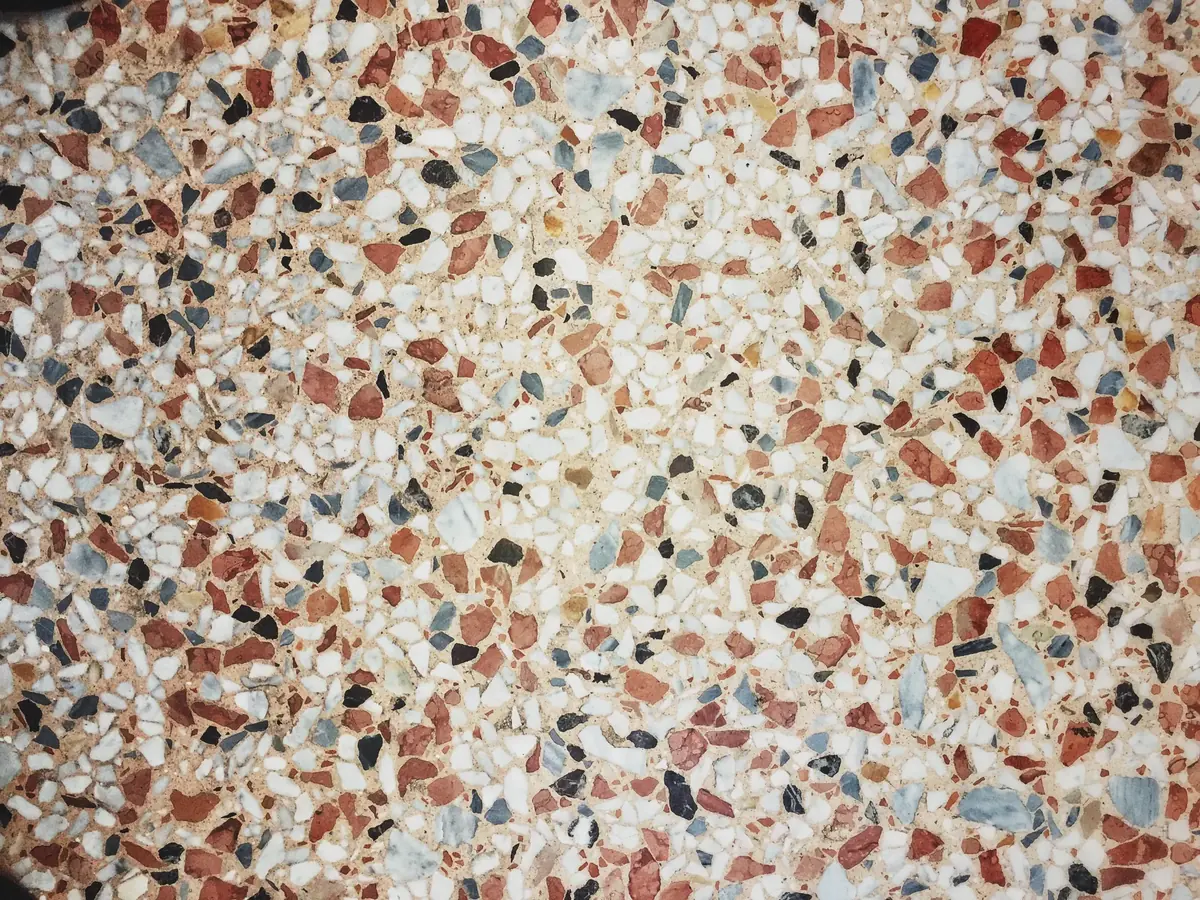
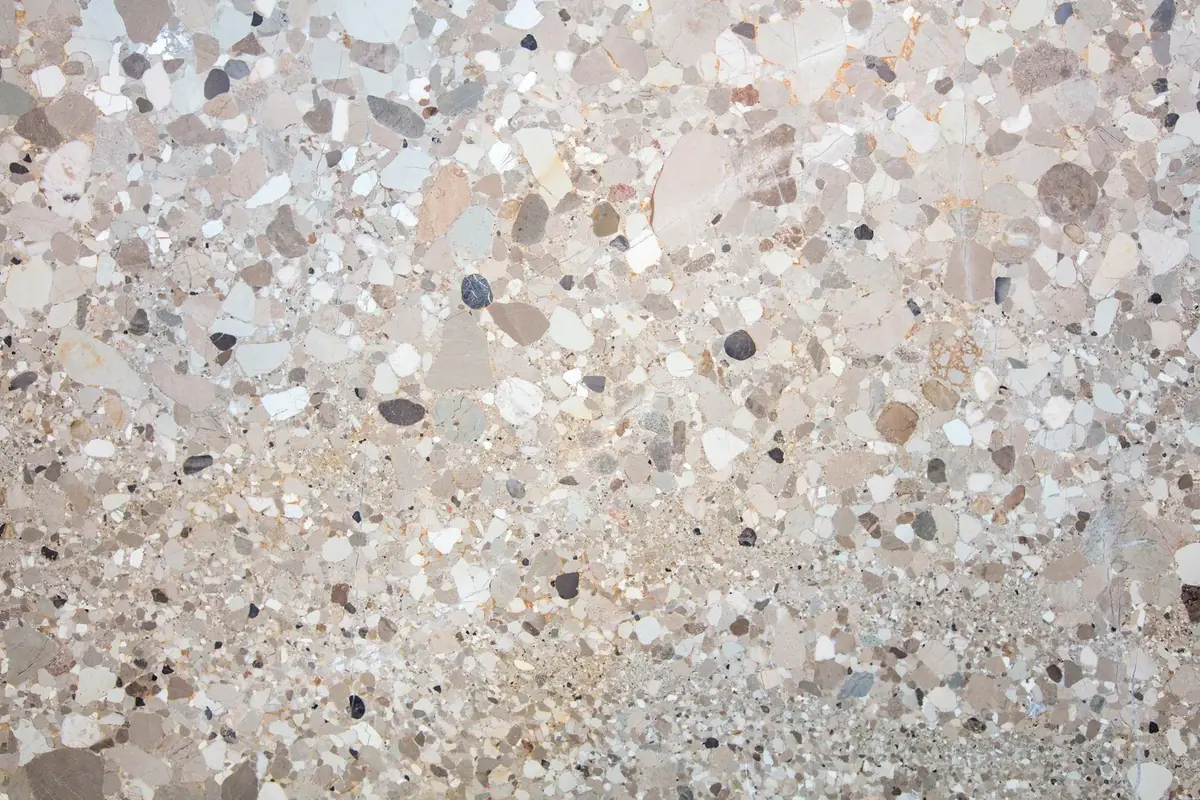
This is the most popular garage finish we install, and for good reason. Vinyl flakes are thrown by hand into the wet base coat until the surface is completely covered, then the excess is scraped and vacuumed off before the clear topcoat goes on. The result has a fine texture that improves grip, and the multicolor pattern hides dust, tire scuffs and minor imperfections in the concrete. Blends range from cool grays to warm desert tones that pair well with stucco and stone exteriors. You can see more on our decorative flake flooring page.
Partial broadcast
A lighter scatter of flake over a solid base color gives a cleaner, more modern look with visible background color. It uses fewer chips, but it also hides less, so it suits newer slabs in good condition.
Solid color
A solid gray, tan or white floor with a clear or tinted topcoat has a crisp, workshop feel. Solid floors show dust and tire marks more readily than flake, which is worth knowing if the garage door is open a lot.
Metallic epoxy
For show garages and car collections, a metallic epoxy floor can look spectacular under good lighting. It is smoother and shows scratches more than flake, so we usually recommend it for garages where cars come and go gently and the floor is treated like an interior surface.
How we install a garage floor
Day one: assessment and prep
We start by checking the slab. A moisture test tells us whether vapor coming up through the concrete could cause problems; most Phoenix garage slabs test fine, but older homes with poor drainage or landscaping irrigation against the foundation sometimes show elevated readings. We also look for existing coatings, oil saturation, previous patching and any cracks that appear to be moving.
Grinding comes next. We use planetary diamond grinders connected to HEPA dust extractors for the open floor and smaller hand grinders for edges along the walls, around the water heater platform and into the corners. Deep oil stains may need extra grinding or a degreasing treatment, because oil left in the pores will interfere with adhesion.
Cracks and spalls are then filled. Control joints, the straight saw cuts in the slab, are either filled or honored depending on the system and your preference. Filling them gives a continuous look; leaving them open lets the slab move along those lines without telegraphing a new crack through the coating.
Building the coating
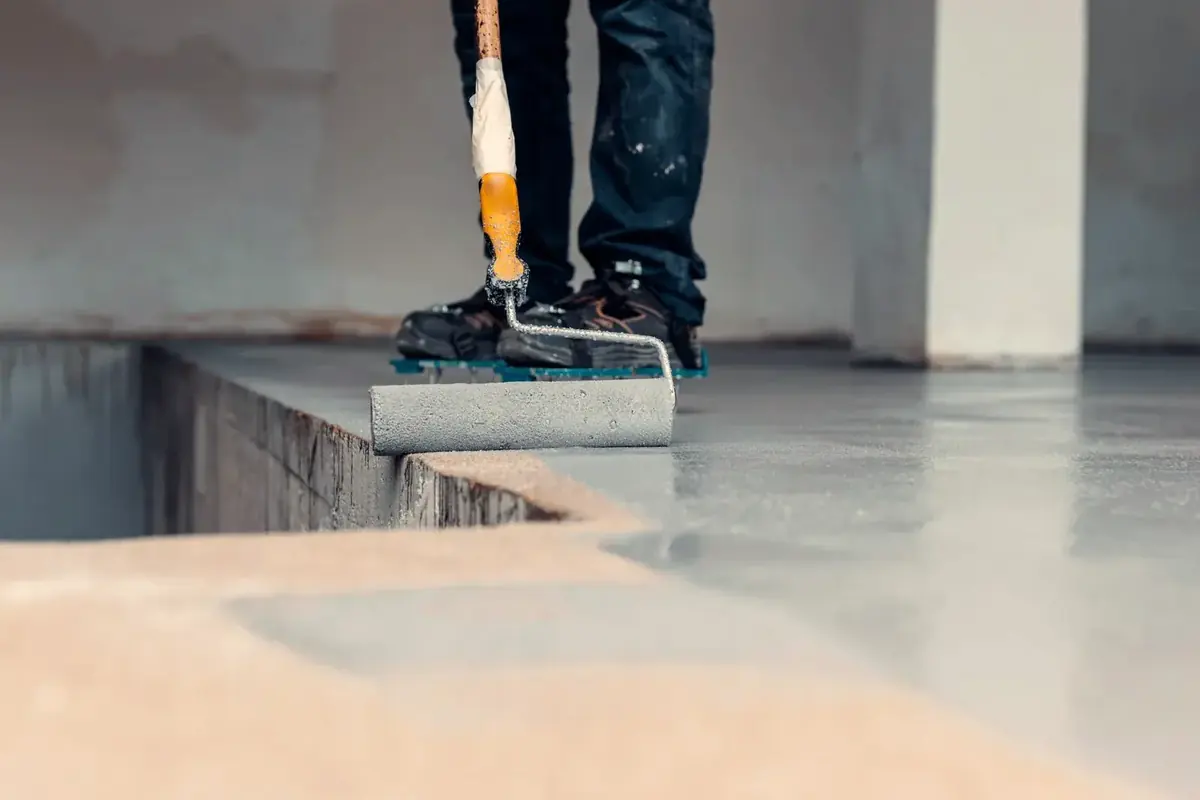
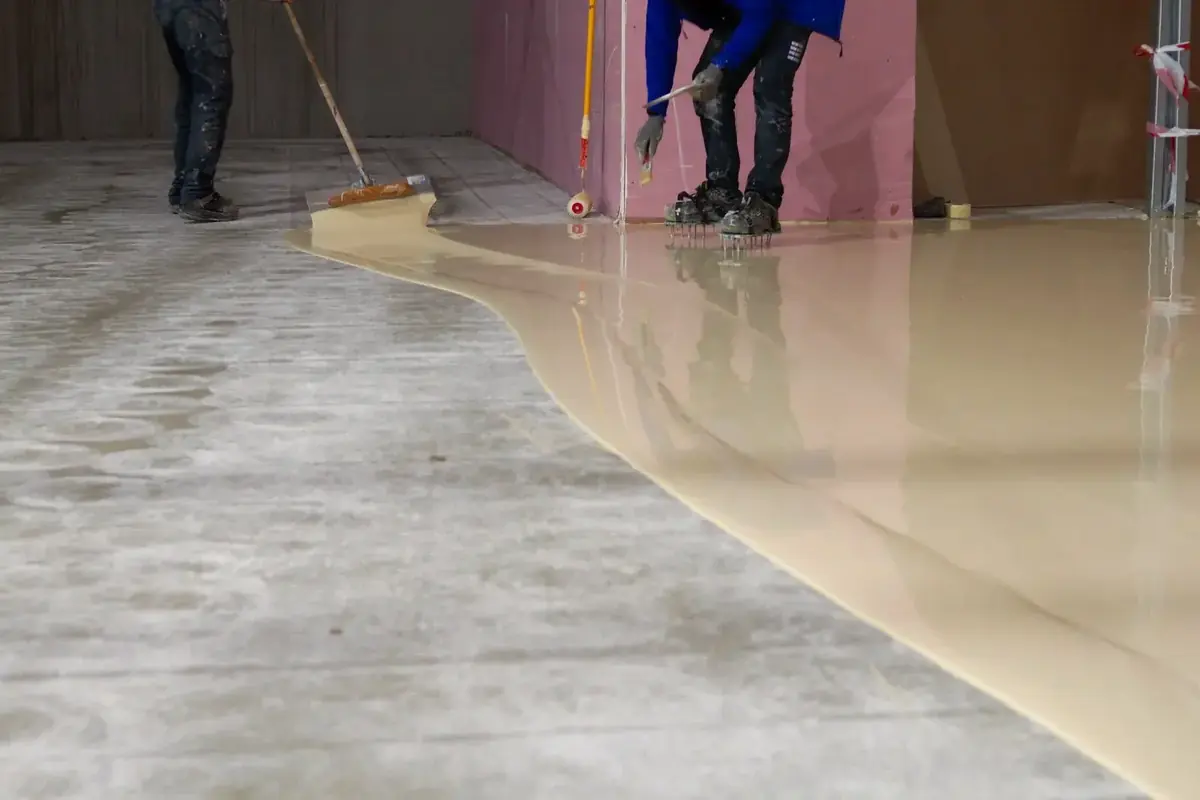
With the floor vacuumed clean, the base coat is mixed in measured batches and applied with squeegees and rollers. Flake is broadcast while the base is wet. Once the base has cured enough to walk on, the loose flake is scraped and vacuumed, and the surface is inspected for high spots. Then the clear topcoat goes down.
With a polyaspartic topcoat, many garage floors can be done in one or two days of work. Fully epoxy systems take longer because each layer needs more time before recoating. In every case we tell you when you can walk on the floor, when you can move items back in, and when you can park. Those are three different times, and the last one matters most.
Protecting the cure
Fresh coatings are softer than they will be in a week. We recommend keeping vehicles off until the manufacturer's full return-to-service time has passed and placing pads under motorcycle kickstands, jack stands and heavy cabinet legs.
The difference professional installation makes
Retail garage kits are sold everywhere, and we see their aftermath regularly. The coating material in a kit is usually a thin water-based epoxy, often applied after an acid etch that does little to remove the surface sealer left from construction. In a Phoenix summer, those floors tend to peel under the tires within a season or two.
A professional system differs in four ways that matter:
- Prep by diamond grinding, which reliably opens the surface and removes contaminants that etching leaves behind.
- Higher-solids materials that build real thickness instead of a thin paint-like film.
- Correct mixing and timing, including working within each product's recoat window so layers bond chemically.
- Repairs done before coating, not covered over.
There is also experience reading a slab. Knowing when a dark spot is old oil versus moisture, or when a crack is likely to keep moving, changes how a floor is built.
Phoenix-specific considerations for garage floors
Hot tire pickup
When a car parks after a drive on summer asphalt, its tires are hot and slightly soft. As they cool on the floor, they contract and grip the surface. On a coating that is poorly bonded or not fully cured, that grip can pull the coating up and leave tire-shaped bare spots. The fix is not a magic product. It is thorough grinding, a base coat that bonds deeply, a topcoat with the hardness to resist plasticizer transfer from tires, and a patient wait before parking.
UV and west-facing doors
Many Phoenix garages face west or south, and plenty of homeowners leave the door open during evening projects. Sunlight reaching an aromatic epoxy surface causes it to yellow and chalk over time. A UV-stable polyaspartic topcoat keeps the color true, which is one of the main reasons we use it on most garage floors.
Application temperature
Garage interiors in July and August can be extremely hot, and the slab holds heat into the evening. Hot concrete shortens working time and can cause bubbles or outgassing as air escapes from the warming slab. We start early, check surface temperature before mixing, and adjust batch sizes to the conditions. In winter, the opposite applies: cool slabs slow the cure, so return-to-service times stretch.
Dust and monsoon season
Anything that lands on a wet coating stays there. During monsoon months, afternoon wind and dust storms can roll in quickly. We keep garage doors closed during application and watch the forecast closely.
Post-tensioned slabs
Many newer homes in the Valley are built on post-tensioned slabs, which contain steel cables under high tension. Surface grinding is safe, but deep saw cuts or core drilling are not something to do casually. Our prep stays at the surface, and if a repair would require cutting into the slab, we discuss it with you first.
Maintaining a coated garage floor
Care is simple. Sweep or blow out grit regularly, since sand is the main source of wear on any floor. Wash with water and a mild, pH-neutral cleaner when needed. Wipe up brake fluid, battery acid and paint stripper quickly; most coatings resist automotive fluids well, but a few aggressive chemicals can stain or soften a topcoat if left sitting. Use a plywood pad or puck under kickstands and jack stands, and avoid dragging steel shelving across the surface. If the floor ever looks dull in the traffic lanes after many years, a fresh topcoat can often be applied after light abrasion, without redoing the whole system.
Garage floor coating questions
How long does a garage floor coating take?
A standard two-car garage with a flake system and polyaspartic topcoat is usually one to two days on site. Larger garages, heavy repairs or full epoxy systems add time. You will need to keep vehicles out for a further period afterward, which we specify in writing.
Do I need to empty the garage completely?
Yes, the floor needs to be clear. Built-in cabinets can stay if they are raised or sit on legs, and we coat around them. Freestanding shelving, refrigerators and stored items should come out.
Will the coating stop my garage floor from cracking?
No coating can stop concrete from moving. We repair existing cracks so the floor looks continuous, but if the slab moves again, a hairline crack can reappear through the coating. Flake finishes make these much less noticeable.
Is a flake floor slippery when wet?
Flake has a natural texture from the chips, which helps. For garages that see a lot of water, such as from washing cars inside, we can add a fine anti-slip aggregate to the topcoat.
Can you coat a garage that has an old DIY epoxy kit on it?
Yes. We grind the old coating off as part of prep. Leaving a weakly bonded kit in place and coating over it would put the new floor at the mercy of the old one.
What about the garage step and stem wall?
We can coat the step up into the house and the lower part of the stem wall, which gives the room a finished, cove-like look and makes cleaning easier. Mention it during the estimate so it is included.