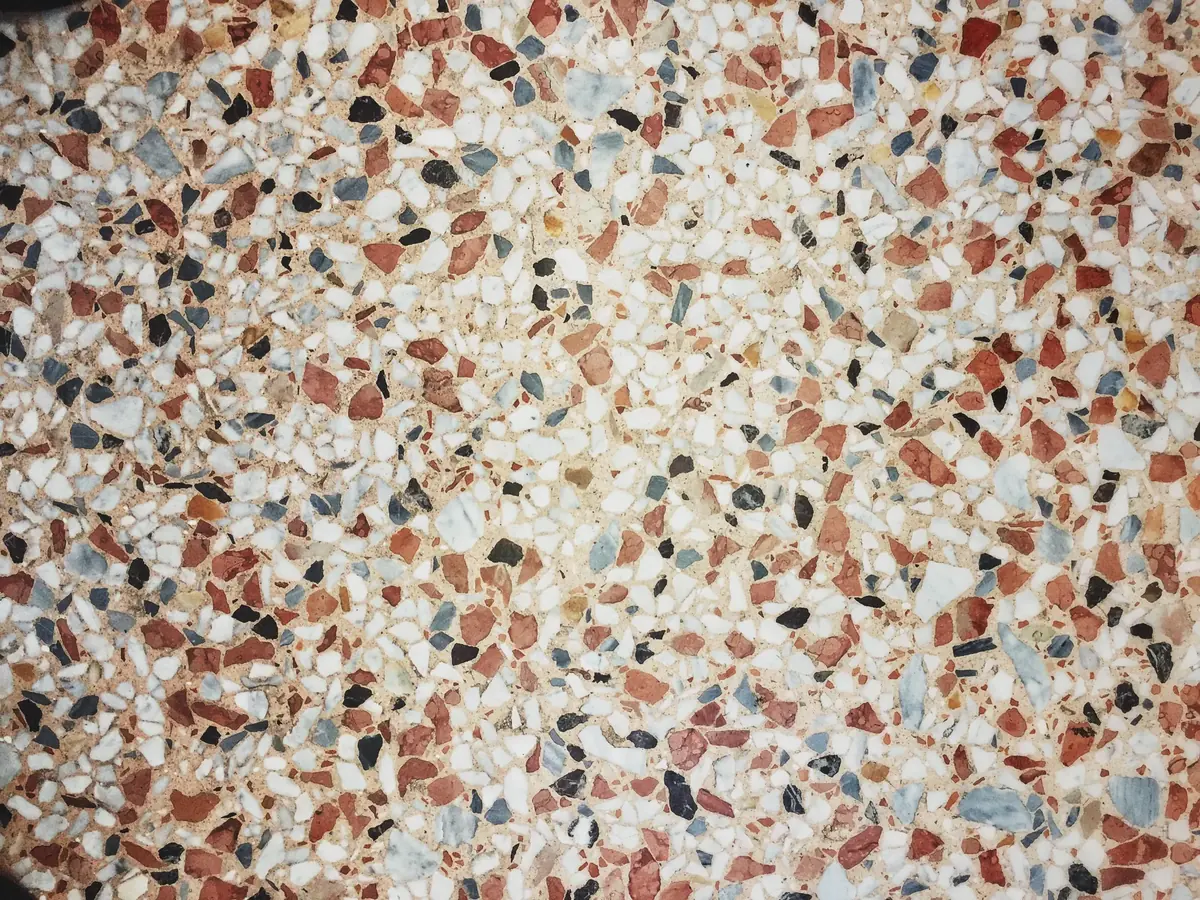
Decorative flake flooring is the workhorse of the coating world, and that is meant as a compliment. It is the finish we install more than any other, because it balances appearance, durability and practicality better than almost anything else that goes on concrete. The chips give the floor a speckled, stone-like look, they add a subtle texture that improves grip, and the pattern hides the dust, tire marks and hairline repairs that a smooth solid floor would show.
You will hear flake floors called "chip floors," "fleck floors" or "broadcast systems." They all mean the same idea: decorative media scattered into a wet coating and locked in with a clear layer on top.
How a flake floor is built
The structure matters because it determines how well the floor performs.
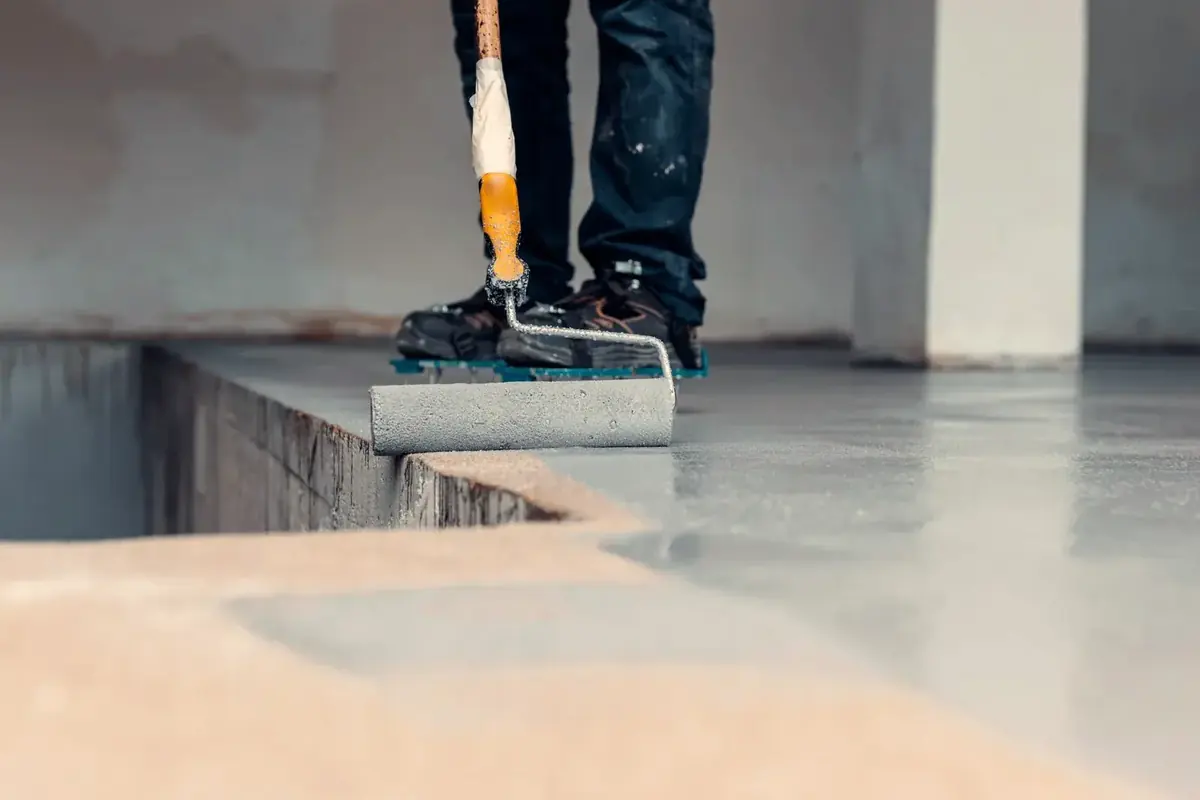
The base coat is a pigmented epoxy or polyurea, colored to match the overall tone of the flake blend so that any small gaps between chips don't stand out. It is applied over a diamond-ground, repaired slab.
The broadcast happens while the base is still wet. Installers throw flake up and out so it falls evenly, working across the room until the base is fully covered. In a full broadcast, the chips are applied to rejection, meaning more are thrown than the coating can hold, so no base color remains visible.
Scraping and vacuuming come once the base cures. A floor scraper knocks down chips that are standing on edge, and the excess is vacuumed up. This step decides how smooth or textured the final floor feels.
The clear topcoat encapsulates the flake. One heavier coat, or two thinner ones, fills in around the chips. More topcoat produces a smoother surface; less leaves more texture. Polyaspartic is the most common choice because it is UV-stable and cures quickly.
Benefits of a flake finish
It hides a lot. Desert dust, light tire scuffs, small chips and repaired cracks all disappear into the pattern. This is the main reason flake dominates garages.
It has grip. The texture of the chips under the topcoat gives more traction than a smooth gloss floor, and grit can be added for wetter areas.
It is repairable. If a floor gets gouged, a small area can be ground, rebroadcast with the same blend and recoated. Because of the random pattern, the patch blends far better than it would on a solid color.
It is durable. Full-broadcast systems with a proper topcoat are thick, impact-tolerant and resistant to automotive fluids.
It looks finished. Even a modest garage or utility room feels deliberate with a flake floor.
Choosing a blend and chip size
Color families
Blends are mixes of several chip colors. In Phoenix we see a few clear preferences:
- Granite and cool gray blends pair with modern exteriors, white cabinets and black hardware. They are the most popular and hide dust well.
- Desert and earth-tone blends with tan, terracotta, cream and brown suit Spanish Colonial, Santa Fe and ranch-style homes.
- Light blends with white, beige and pale gray brighten dark garages but show dark dirt a little more.
- High-contrast blends with black and white make a bold statement in gyms, shops and showrooms.
Chip size
The most common size is about a quarter inch, which gives a classic look. Smaller eighth-inch chips create a finer, more granite-like texture and are often used in commercial spaces. Mixed sizes are also available.
Full versus partial broadcast
Full broadcast covers the base entirely and gives the strongest, most textured system. Partial broadcast scatters chips over a visible base color for a lighter, more contemporary look. Partial floors use less flake but have less build and hide less.
Where flake floors make sense
- Residential garages, the most common application by far.
- Laundry rooms and mudrooms, where water, dirt and detergent meet the floor.
- Home gyms and workshops, which benefit from the texture and impact tolerance.
- Covered patios and carports, using a UV-stable topcoat.
- Commercial restrooms and locker rooms, where cleanability and traction both matter.
- Retail backrooms, break rooms and corridors that need a durable, easy-clean surface.
- Veterinary clinics, grooming shops and kennels, where wet cleaning is constant.
The installation process
1. Site visit and samples
We measure, inspect the slab and show chip samples. Choosing on site matters: the same blend can look warmer under incandescent light and cooler under daylight LEDs.
2. Grinding and dust control
Diamond grinding removes sealers and creates profile. Dust extractors keep the space and the neighbors' driveways clean.
3. Crack and joint work
Cracks and spalls are repaired. Control joints are filled or left as expansion lines, depending on your preference and the slab's history.
4. Base coat and broadcast
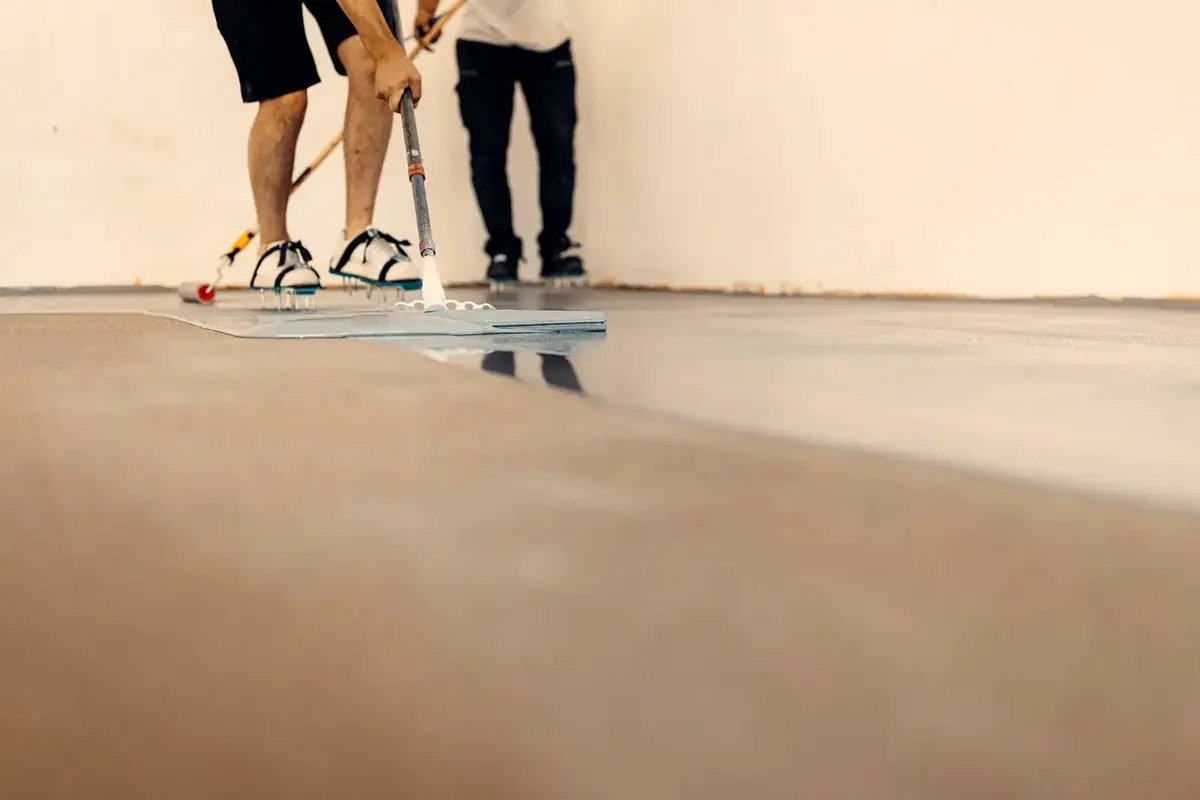
The base is mixed in controlled batches and spread evenly, then flake is broadcast to full coverage while the coating is wet. Edges get careful attention so the pattern runs right to the wall.
5. Scrape, vacuum, topcoat
After curing, the floor is scraped and vacuumed, then the clear topcoat is applied. Optional anti-slip grit goes into the topcoat at this stage.
6. Cure and return to use
Foot traffic usually resumes the same or next day. Vehicles and heavy items come back later, on a schedule we provide.
Professional versus DIY flake
Many retail kits include a small bag of flake meant to be sprinkled lightly over a thin coating. That produces a sparse partial broadcast over a thin film, which is not the same thing as a full-broadcast system. The difference shows up in thickness, texture and durability. A professional flake floor uses many times more chips, a thicker base coat and a substantial clear topcoat, all on a ground surface rather than an etched one.
Phoenix factors for flake floors
Sun and color stability
The vinyl flakes themselves are generally color-stable, but the coating around them may not be. If your floor will see direct afternoon sun, through an open west-facing garage door or on a patio, an aliphatic polyaspartic topcoat is the right choice so the clear layer stays clear rather than yellowing.
Heat and texture
Hot conditions cause materials to set faster, which affects how evenly flake settles and how the topcoat levels. We adjust the pace of the broadcast and the topcoat thickness to suit the day's temperature.
Dust
Because flake hides dust so well, it is especially suited to Phoenix garages where the door opens to the desert wind every day. Many clients who start out wanting a solid color switch to flake for this reason alone.
Keeping a flake floor looking good
Sweep or blow out grit, and wash periodically with water and a pH-neutral cleaner using a soft deck brush to reach into the texture. Avoid harsh acidic cleaners. If you ever want more shine or protection after years of use, a maintenance topcoat can be added after light sanding.
How flake compares with other finishes
| Finish | Hides dust and wear | Texture underfoot | Best suited to |
|---|---|---|---|
| Full-broadcast flake | Very well | Light to moderate | Garages, laundry rooms, gyms, patios |
| Partial-broadcast flake | Moderately | Light | Newer slabs, modern interiors |
| Solid color | Poorly | Smooth unless grit is added | Workshops, utility rooms, offices |
| Metallic epoxy | Poorly | Smooth | Living spaces, showrooms, show garages |
The table is a simplification, but it captures why flake is the default answer for working spaces: it is the most forgiving finish to live with day to day.
Coordinating flake across a property
Many clients coat more than one area at once, such as a garage, a laundry room off the garage and a covered patio. Using the same blend everywhere gives the house a consistent thread, while switching between a darker garage blend and a lighter indoor or patio blend can help each space suit its use. When areas connect through a doorway, we plan the transition line so it falls neatly under the door or at a threshold rather than mid-room.
If you are selling a home in the next few years, neutral gray and tan blends appeal to the widest range of buyers. If you are staying put, choose what you love; the floor will be there a long time.
Questions about decorative flake floors
How textured is a flake floor?
It depends on the topcoat. With a standard single topcoat, you can feel a light texture from the chips. Adding a second topcoat makes it smoother; skipping heavy topcoat build leaves more grip. We can show you samples with different textures.
Can I choose a custom blend?
Yes. Beyond standard blends, many manufacturers can mix custom combinations. Custom blends may add lead time, so we plan for that in the schedule.
Will the flake fade in sunlight?
The chips themselves rarely change color. What can discolor in sunlight is the resin around them, so any floor that catches direct sun gets a non-yellowing clear coat.
Can flake be used inside the house?
It can, particularly in laundry rooms, mudrooms and gyms. In main living spaces, many people prefer a smoother solid or metallic finish, but small-chip partial broadcasts are a good middle ground.
How do I repair a chip in a flake floor?
Contact us. A small gouge is ground out, filled, rebroadcast with matching flake and topcoated. Keep a small bag of your blend for this purpose; we leave one with you after installation where possible.