Polyaspartic coatings have become one of the most important materials in the floor coating industry over the past two decades, and for Phoenix floors they solve two problems at once. They resist UV yellowing, which matters in a city with intense sunshine for most of the year, and they cure fast, which shortens the time a garage or business is out of use.
That speed is a double-edged tool. Polyaspartics are less forgiving to apply than epoxy, and they behave very differently on a hot slab than on a cool one. Understanding how and where to use them is a large part of building a good floor here.
What polyaspartic is
Polyaspartic coatings are a type of aliphatic polyurea. They are formed by reacting a polyaspartic ester with an aliphatic isocyanate. The word "aliphatic" matters: aliphatic coatings do not contain the ring-shaped molecular structures that cause aromatic coatings like standard epoxy to yellow in sunlight. That gives polyaspartic its UV stability.
They are formulated in a range of solids content and cure speeds. Some are designed as clear topcoats over epoxy or polyurea base coats. Others can be used as primers and base coats themselves, allowing an entire floor system to be built from polyaspartic.
Advantages of polyaspartic coatings
UV stability. Polyaspartic topcoats keep their clarity and color in sunlight, which makes them suitable for patios, carports, pool surrounds, open garages and spaces with large windows.
Fast return to service. Depending on the product and conditions, recoating can happen within hours and foot traffic often resumes the same day. Many garage floors can be completed in a single day of work.
Abrasion and scratch resistance. Polyaspartic topcoats are hard and tough, which helps them resist the grit and scuffing that wear down softer finishes.
Chemical and stain resistance. They stand up well to automotive fluids, many cleaners and everyday spills.
Wide temperature range for installation. Polyaspartics can cure at lower temperatures than many epoxies, which is helpful during cool winter mornings.
Clarity. Clear polyaspartic topcoats are very transparent, allowing flake and color to show crisply.
Limitations to know about
No coating is perfect for everything. Polyaspartic has drawbacks that a good installer works around:
- Short working time. It begins to set quickly, sometimes in minutes on a hot day. Large areas need a practiced crew working in small batches.
- Thinner film per coat. Many polyaspartics build less thickness in one coat than a high-build epoxy, so system design matters.
- Surface sensitivity. Because it sets fast, it doesn't have as long to wet into concrete pores, so priming and preparation must be excellent when it is used as a base coat.
- Cost. Material costs are generally higher than standard epoxy.
That's why many of our systems combine materials: an epoxy or polyurea base coat for penetration and build, followed by a polyaspartic topcoat for UV resistance and wear.
Common polyaspartic systems
Flake system with polyaspartic topcoat
The most common residential system: ground slab, pigmented base, full flake broadcast and a clear polyaspartic topcoat. It is quick to install and holds up to sun through an open garage door. See garage floor coatings for the full garage process.
Full polyaspartic system
Primer, base and topcoat are all polyaspartic. This is useful when speed is critical or when the floor will be fully exposed to sunlight, such as a carport or covered patio.
Clear polyaspartic over stained or polished concrete
A clear coat over decorative concrete protects the surface while letting the concrete's character show. It is popular for patios and modern interiors.
Polyaspartic topcoat over metallic epoxy
Metallic epoxy layers benefit from a polyaspartic or aliphatic urethane topcoat to resist scratching and preserve color.
Where polyaspartic coatings work best
- Residential garages, especially with west- or south-facing doors.
- Covered patios, porches, breezeways and carports.
- Pool surrounds and outdoor kitchens (with appropriate traction additives).
- Retail stores and restaurants that need to reopen quickly.
- Auto dealerships, service drives and showrooms.
- Commercial lobbies with large glass exposures.
- Floors that need to be finished in cooler months.
Our installation approach
Planning around time and temperature
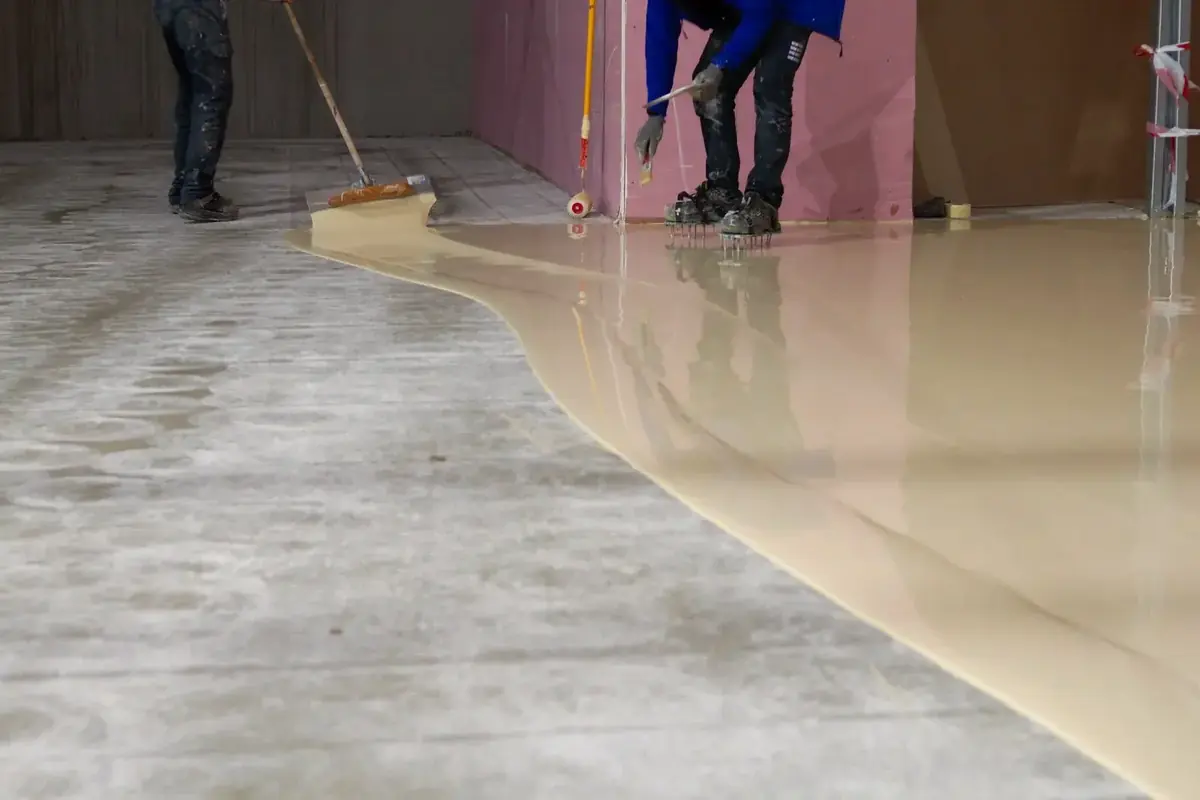
Because polyaspartic cure speed depends heavily on temperature, our first step is planning. We check the forecast, measure slab temperature with an infrared thermometer and choose the product formulation and batch size accordingly. On summer jobs we start at first light and finish the topcoat before the slab heats up.
Preparation
All the usual rules apply: diamond grinding, crack and spall repair, joint treatment and thorough vacuuming. When polyaspartic is used as a primer, preparation must be especially thorough because the material has less time to penetrate.
Application
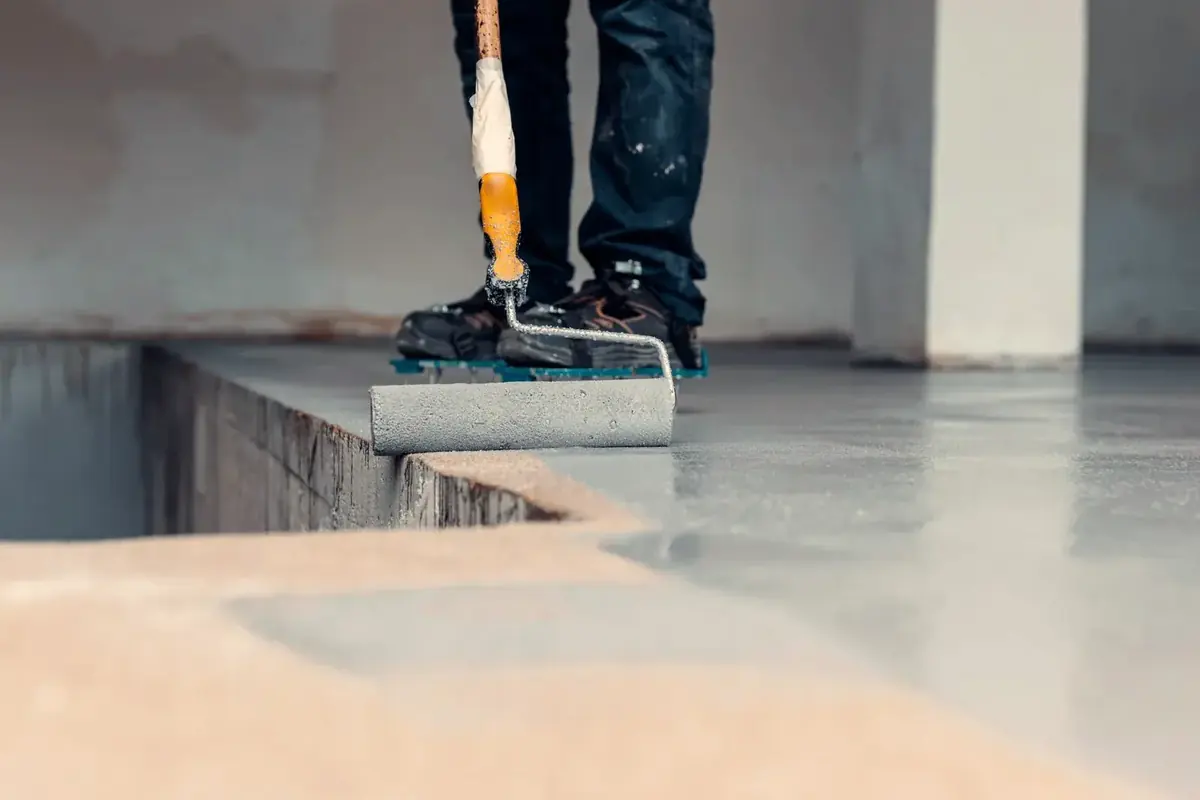
Polyaspartic is typically applied with a squeegee to spread and a roller to back-roll for an even film. One person mixes while others apply, keeping a wet edge. Batches are kept small enough to be spread and rolled well before they begin to set.
Return to service
Light foot traffic is often possible within hours. Vehicle traffic typically resumes after about a day or longer depending on the product and temperature. We always provide a written schedule; patience in those first days pays off in long-term performance.
Why professional application matters
Polyaspartic punishes inexperience. Mixed too large a batch on a 95-degree morning, it can begin setting in the bucket. Rolled too slowly, it leaves lap marks and roller lines. Applied over a damp or poorly prepared surface, it may bubble or fail to bond. Professional installers develop a feel for timing, batch sizing and crew coordination that simply cannot be learned from a product label.
There is also product selection. Polyaspartics vary considerably in solids content, cure speed, sheen and recommended use. Choosing the right formulation for the slab, the climate and the purpose is part of the job.
Phoenix-specific notes
Summer installs
High slab temperatures accelerate polyaspartic dramatically. We use slower formulations in summer where available, mix smaller batches and start early. In extreme heat we may recommend rescheduling a job to a cooler stretch, or moving it into the early morning entirely.
Monsoon humidity
Humidity affects some polyaspartic and isocyanate-based coatings, potentially causing bubbling or a hazy finish. During monsoon season we track dew point and humidity, and keep the space as controlled as possible.
Sun-exposed surfaces
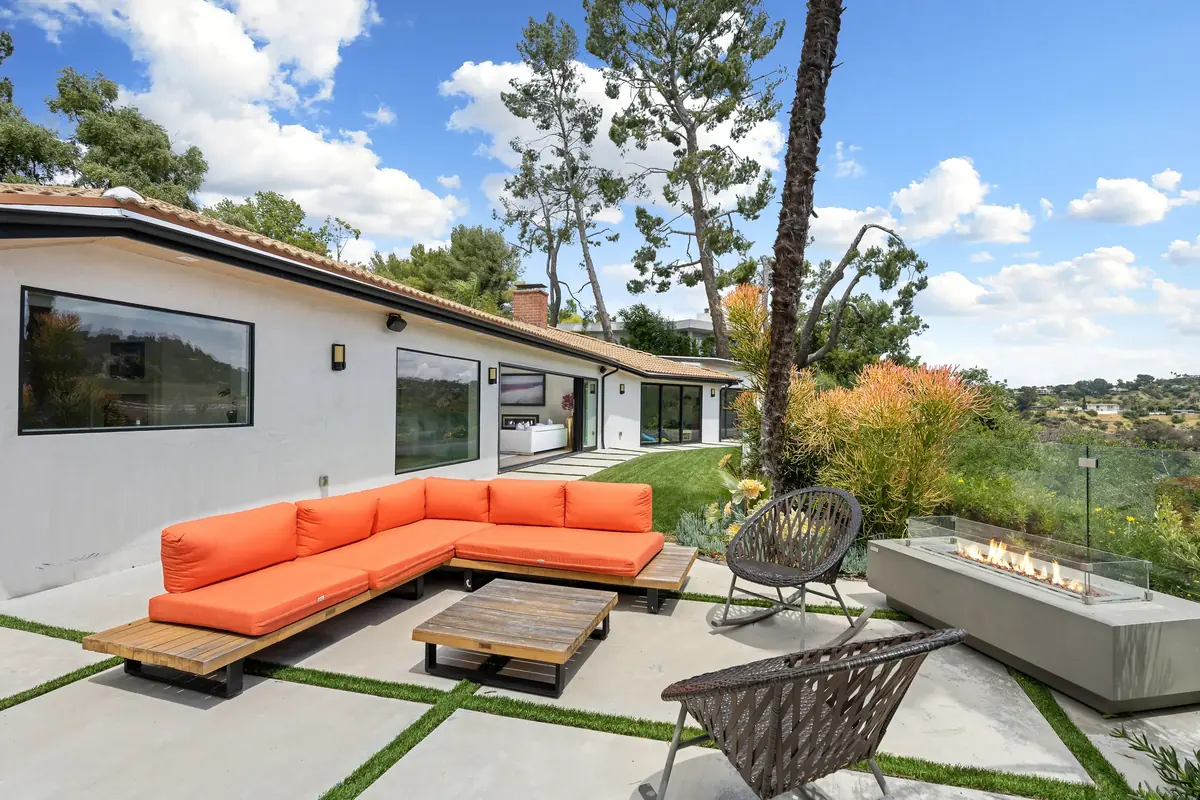
For patios and carports, polyaspartic is often the right final layer because it resists UV breakdown. Light colors help keep outdoor surfaces from getting as hot underfoot, though any surface in direct Phoenix sun will get warm in summer.
Maintenance
Sweep regularly and wash with a pH-neutral cleaner. On outdoor polyaspartic surfaces, rinse off dust and pollen periodically and clear away leaves before they stain. Avoid strong acids. If a polyaspartic topcoat dulls in high-traffic lanes after years of use, it can usually be refreshed by abrading and applying a new coat.
Polyaspartic and epoxy at a glance
| Property | Polyaspartic | Standard epoxy |
|---|---|---|
| UV stability | Resists yellowing | Yellows and chalks in sunlight |
| Working time | Short, especially in heat | Longer, more forgiving |
| Recoat time | Often within hours | Typically many hours to overnight |
| Build per coat | Moderate | Can be high-build |
| Typical role | Topcoat or full fast-cure system | Primer, base or body coat indoors |
These are general characteristics; individual products vary, and we choose specific materials based on the slab and the conditions on install day.
How to read a polyaspartic quote
If you are comparing proposals, look for a few details. Does the quote specify mechanical grinding, or does it say "prep" without describing it? Is the polyaspartic a topcoat over a separate base, or is it described as the entire system? How many coats of clear are included over flake? What return-to-service times are stated for foot traffic and vehicles? A low price sometimes comes from a thinner topcoat or a skipped grind, and those differences decide how the floor holds up.
Carports, breezeways and semi-outdoor spaces
Phoenix homes often have spaces that are neither fully inside nor fully outside: carports, breezeways between the garage and a casita, covered side yards and entry courtyards. These areas get indirect UV all day and direct sun for part of it, along with blowing dust and the occasional monsoon downpour. A polyaspartic system is usually the most sensible choice here because it stays clear in sunlight and returns the space to use quickly. We add texture for areas that get wet and pay close attention to edges, where the slab meets gravel or landscaping, so water and debris don't undermine the coating.
Questions about polyaspartic coatings
Is polyaspartic better than epoxy?
It is better at some things, like UV stability and fast curing. Epoxy is better at others, like penetration, build thickness and longer working time. Many of the best floors use both, each where it performs best.
Can a polyaspartic floor really be done in one day?
Many residential garages can be completed in one working day with a fast-curing system, assuming the slab is in reasonable condition. Heavy repairs, large areas or unusual conditions can extend that.
Does polyaspartic stay clear in direct sun?
Aliphatic polyaspartic coatings are designed to resist yellowing in UV exposure, which is why we use them outdoors and in sun-exposed garages.
Is polyaspartic the same as polyurea?
Polyaspartic is technically a type of aliphatic polyurea, but in the coatings trade the terms are used differently. "Polyurea" often refers to base coats or aromatic products, while "polyaspartic" refers to the aliphatic, UV-stable formulations used as topcoats. Our polyurea coatings page explains the distinction.
Can polyaspartic go over an existing epoxy floor?
Sometimes. When the old epoxy is still tightly stuck to the slab, we sand it to give it tooth and apply polyaspartic over it. Anything lifting, bubbled or flaking gets ground off before new material goes down.