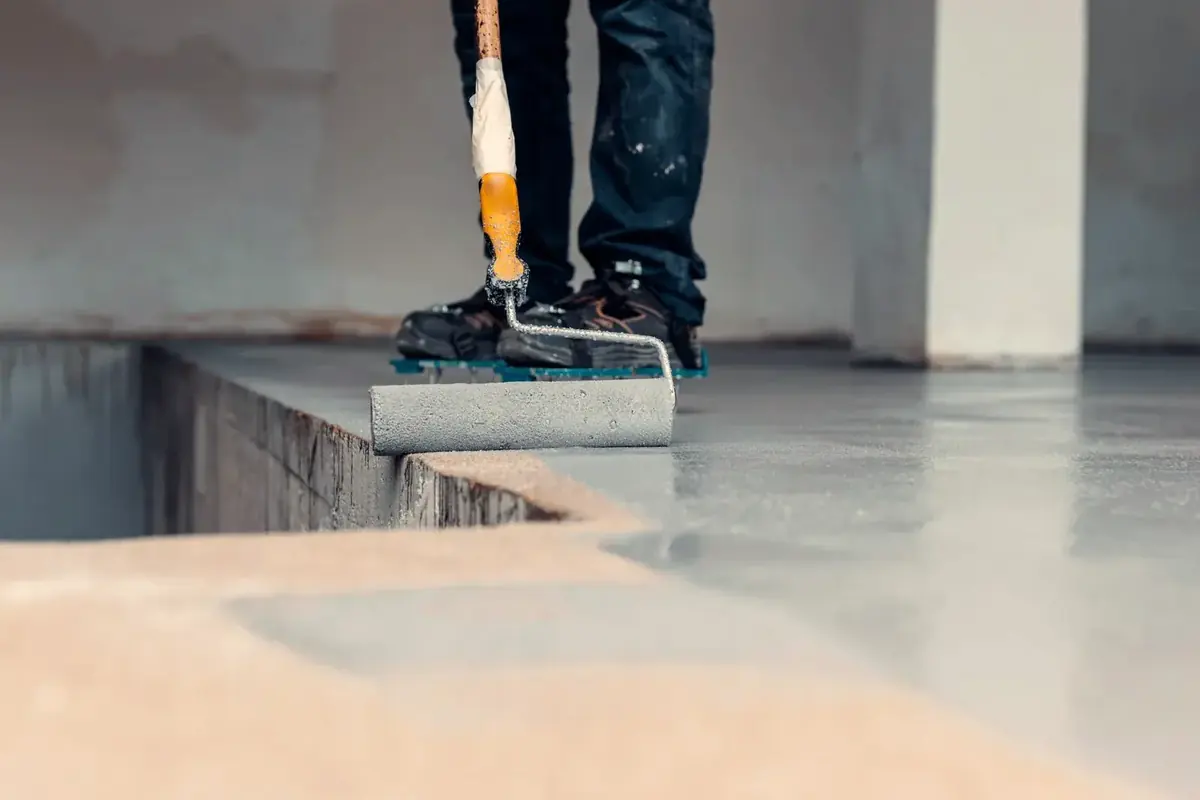
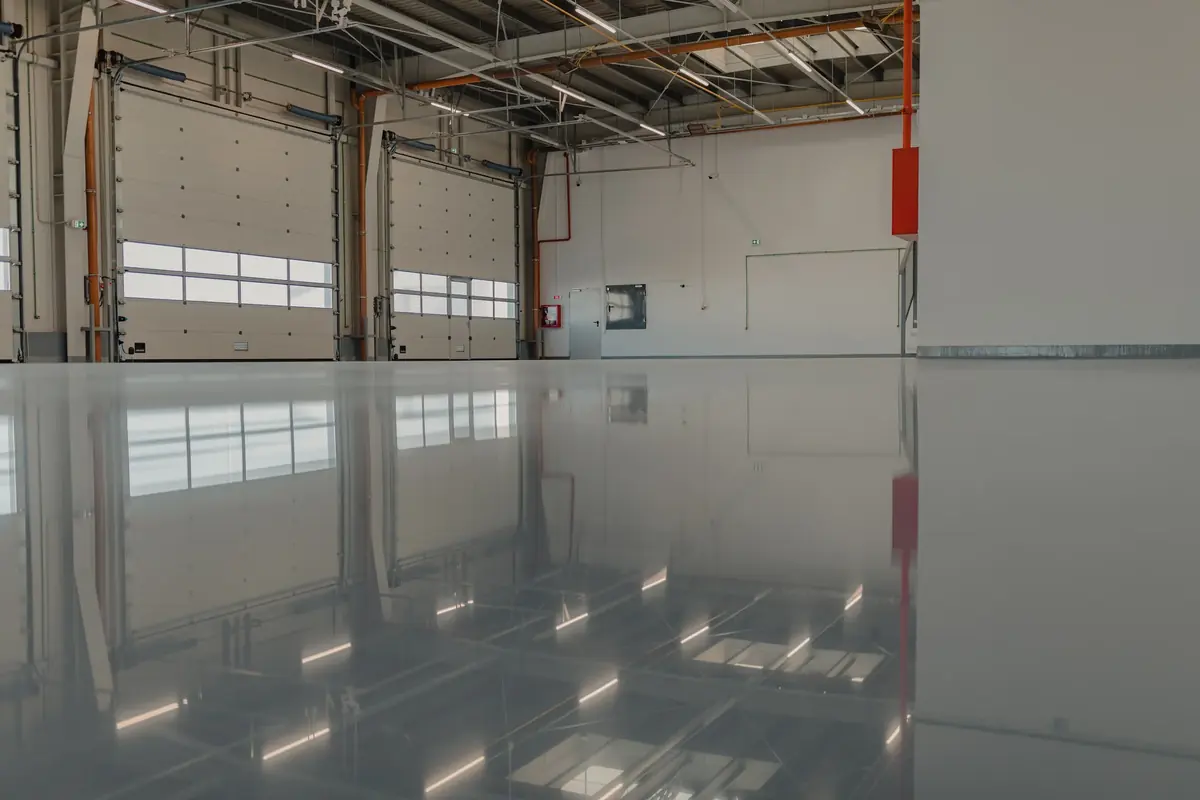
"Polyurea" has become a popular word in floor coating marketing, and it is worth clearing up what it means before discussing why we use it. In the coatings industry, polyurea describes a family of materials formed by reacting an isocyanate with an amine. Some polyureas are spray-applied industrial products used on truck beds, tanks and roofs. Others are hand-applied floor coatings formulated to be rolled and squeegeed like epoxy. When a residential or light commercial floor installer talks about a polyurea floor, they almost always mean the second type, typically used as a base coat beneath a polyaspartic or urethane topcoat.
Understanding that helps you compare quotes honestly. A "polyurea floor" is a system, not a single magic layer, and its performance depends on how it is prepared, applied and topcoated.
Why use a polyurea base coat?
Flexibility. Polyurea base coats generally have more elongation than rigid epoxies. That means they can tolerate slight movement and thermal expansion and contraction without cracking or delaminating as easily. Concrete in Phoenix goes through a large daily and seasonal temperature range, so flexibility is a useful property.
Fast cure. Polyurea base coats set quickly, allowing the flake broadcast and topcoat to follow sooner. Combined with a polyaspartic topcoat, this makes one-day garage systems practical.
Strong adhesion. On a properly ground slab, polyurea primers penetrate and bond well. Many are formulated specifically to wet into the concrete surface.
Wide application temperatures. Polyurea products can often be applied in cooler conditions than many epoxies, which helps in winter.
Impact tolerance. The flexibility that helps with thermal movement also helps absorb impact from dropped tools.
Where polyurea may not be the best choice
- Very high build requirements. For heavy industrial floors that need thick, self-leveling layers, high-build epoxies or urethane cement are often more practical.
- Slabs with moisture issues. Like most fast-curing coatings, polyurea base coats can be sensitive to moisture vapor. Where testing shows high moisture, a moisture-mitigating epoxy primer is usually the better first layer.
- Very large open areas with limited crew. Fast set times demand a well-coordinated team. In very large spaces, a slower epoxy may be easier to install evenly.
- Budget-focused projects. Polyurea materials typically cost more than standard epoxy; for some spaces, epoxy's performance is entirely sufficient.
Polyurea and polyaspartic: how they relate
Polyaspartic is technically a subclass of polyurea, made with a modified amine that slows the reaction enough to allow hand application. In practice, the trade uses the words this way:
| Term as used in flooring | Typical role | Key property |
|---|---|---|
| Polyurea (base coat) | Primer or pigmented base | Fast set, flexible, strong bond |
| Polyaspartic | Clear or pigmented topcoat | UV stable, fast cure, abrasion resistant |
| Epoxy | Primer, base or body coat | High build, long working time, deep penetration |
| Urethane | Topcoat | Scratch and chemical resistance |
Because many polyurea base coats are aromatic, they can yellow in direct sunlight just like epoxy. They are almost always protected by an aliphatic polyaspartic topcoat for that reason.
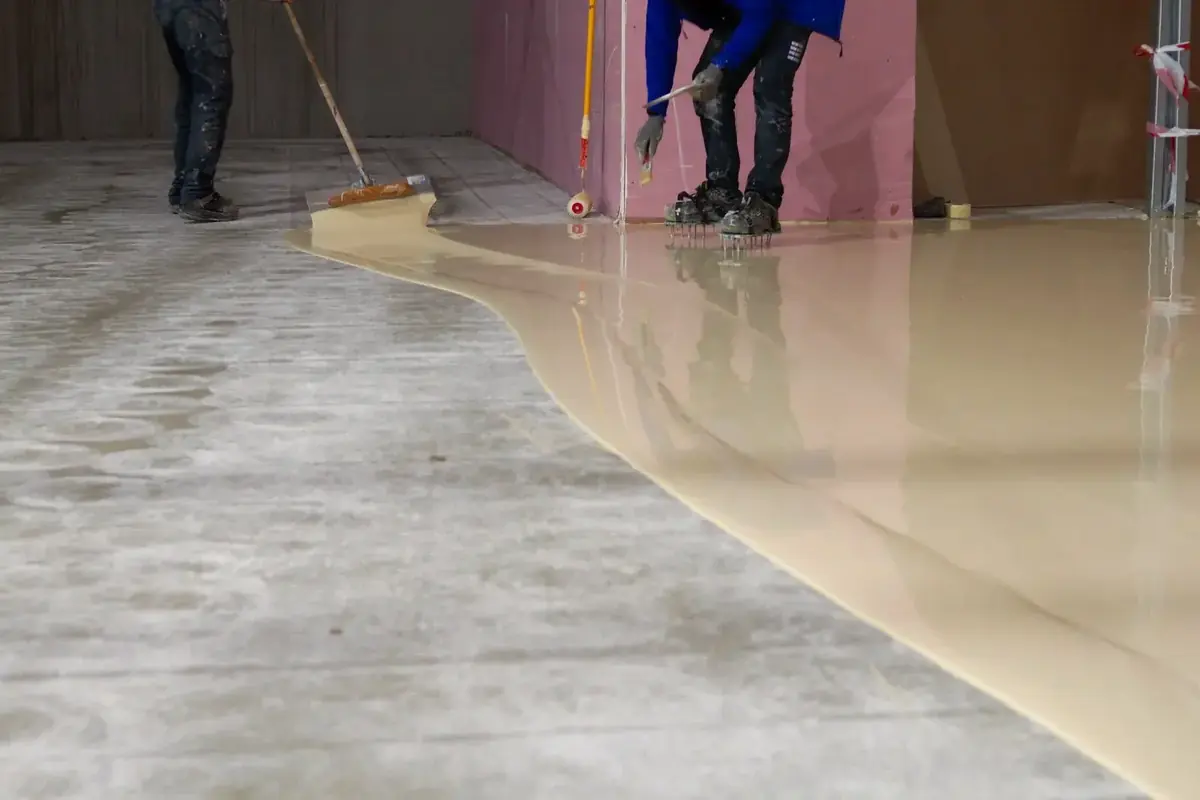
Typical polyurea floor systems we install
Polyurea and polyaspartic flake garage
Ground and repaired slab, pigmented polyurea base, full flake broadcast, polyaspartic clear topcoat. This is one of the fastest high-performance garage systems available, and it is the version most people mean when they ask about a "one-day polyurea floor."
Polyurea base with solid color topcoat
For workshops and utility areas, a polyurea base with a pigmented polyaspartic topcoat creates a clean, solid-color floor. Anti-slip aggregate can be added.
Hybrid systems
Some slabs benefit from an epoxy primer for moisture tolerance or penetration, followed by a polyurea or polyaspartic body. We design these based on testing.
Applications
- Residential garages and RV garages.
- Workshops and hobby spaces.
- Home gyms.
- Detached shops and casitas with utility use.
- Light commercial spaces such as auto detail shops and small service bays.
- Covered patios, with a UV-stable topcoat.
How installation works
Preparation and testing
Polyurea needs a clean, open, properly profiled surface. We diamond grind, vacuum and test moisture. Cracks and spalls are repaired with fast-setting polyurea or epoxy patch material.
Base coat application
The base coat is mixed in small batches and spread with a squeegee, then back-rolled. On a flake floor, chips are broadcast right behind the applicator because the base begins to set quickly.
Scrape and topcoat
Once the base is set, the floor is scraped and vacuumed. The polyaspartic topcoat is then applied in one or two coats to encapsulate the flake and create the wear surface.
Cure and traffic
Foot traffic may resume within hours. Vehicle traffic typically waits about a day or longer depending on the topcoat and temperature. We give you specific times in writing.
Why polyurea systems need experienced crews
Polyurea's fast set is its strength and its risk. An inexperienced installer can lose a batch in the bucket, leave visible lap lines or fail to get flake into the base before it skins over. Coordinated crews, precise mixing and attention to slab temperature are what make these systems perform.
Product knowledge matters too. Polyurea base coats vary widely in solids, viscosity, cure speed and moisture tolerance. Picking the right one for a specific slab and season is part of the job.
Phoenix considerations
Thermal cycling
A garage slab in Phoenix may swing many degrees in temperature through a summer day, and the difference between summer and winter is larger still. Coating flexibility helps the system move with the slab rather than fighting it.
Heat during application
Fast-setting materials become even faster on hot concrete. Summer jobs start early, and we may choose slower formulations.
Hot tire pickup
The base coat's bond to the concrete is the first defense against tires pulling a coating up. Proper grinding and a penetrating base are essential, as is waiting for the topcoat to cure before parking.
Sun exposure
Because many polyurea base coats are aromatic, any area exposed to direct sun must be protected by a UV-stable topcoat. We never leave a polyurea base exposed.
Maintenance
Maintenance is the same as for other coated floors: sweep or blow out grit, wash with water and a pH-neutral cleaner, wipe up harsh chemicals promptly and protect against point loads like jack stands. The topcoat can be refreshed later if it dulls.
Questions to ask when comparing polyurea quotes
Because "polyurea" is used loosely in advertising, a few questions help you compare proposals on equal terms:
- Is the polyurea the base coat, the topcoat or both? Most residential systems use polyurea as the base and polyaspartic as the top. Knowing which layer is which tells you what protects against UV.
- How is the slab prepared? Diamond grinding should be specified. Acid etching or a quick scrub is not enough for fast-curing materials.
- How much flake and how much topcoat? Full broadcast versus partial, and one coat of clear versus two, make a large difference in thickness and texture.
- What happens with moisture? Ask whether the slab will be tested and what the plan is if readings are high.
- What are the return-to-service times? Foot traffic, light items and vehicles should each have a stated wait.
Polyurea on older slabs
Older Phoenix garages often have oil-soaked areas, previous paint or DIY coatings, and patched cracks. Fast-curing base coats have less time to penetrate contaminated or dense concrete, so extra attention goes into grinding, degreasing and repairs. In some cases we start with a penetrating epoxy primer on badly contaminated sections and then continue with the polyurea system. That kind of hybrid approach is decided on site, after we see how the concrete responds to grinding.
Is a one-day floor the right goal?
Speed is a genuine advantage, especially when you need the garage back for your car. But a fast floor is only worth having if it is also a well-prepared floor. On a slab that needs heavy repairs or oil remediation, we may recommend spreading the work over two days so preparation is not rushed. The coating cures quickly either way; the question is whether the concrete underneath was ready for it. We would rather tell you an honest timeline than promise one day and cut corners on grinding.
Questions about polyurea floor coatings
Is polyurea stronger than epoxy?
"Stronger" depends on what you measure. Polyurea base coats are typically more flexible and faster to cure; epoxies often build more thickness and offer longer working time. Both can make excellent floors when installed correctly.
Is a polyurea floor really four times stronger than epoxy?
You may see claims like this in advertising. They usually compare specific lab properties of specific products and don't reflect real-world performance. We'd rather talk about how a system will behave on your slab than quote marketing ratios.
Can polyurea be used outdoors?
As a base coat, it must be protected by a UV-stable topcoat outdoors. Full aliphatic systems are used on patios and carports.
How long does a polyurea and polyaspartic garage floor take?
Many garages are completed in a single working day, with vehicles back after the specified cure time.
Will a polyurea floor bridge cracks?
Its flexibility helps it tolerate minor movement, but it will not hold together a slab that is actively moving. We repair cracks before coating and point out any that may reappear.